2026-06-01
Content
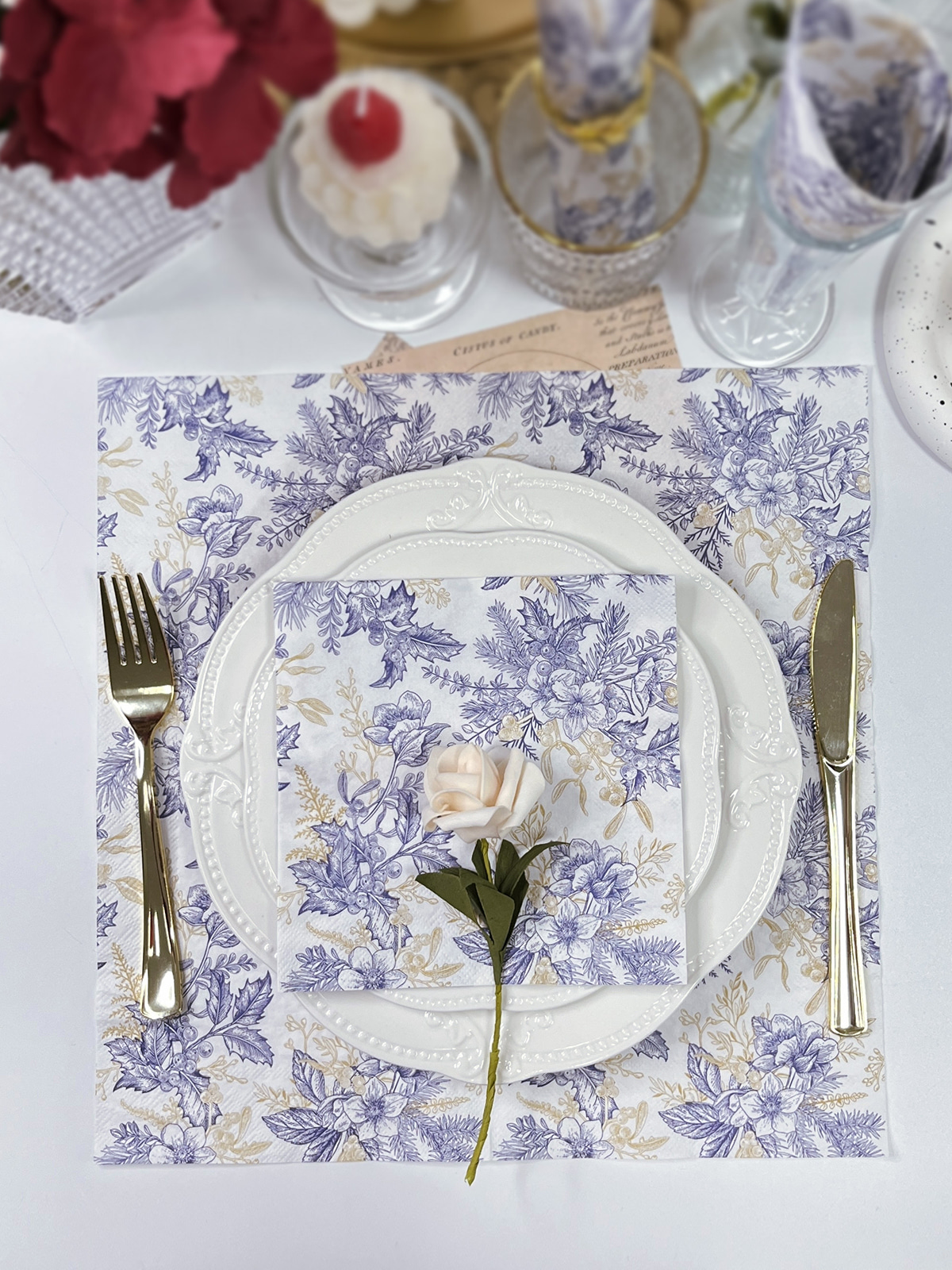
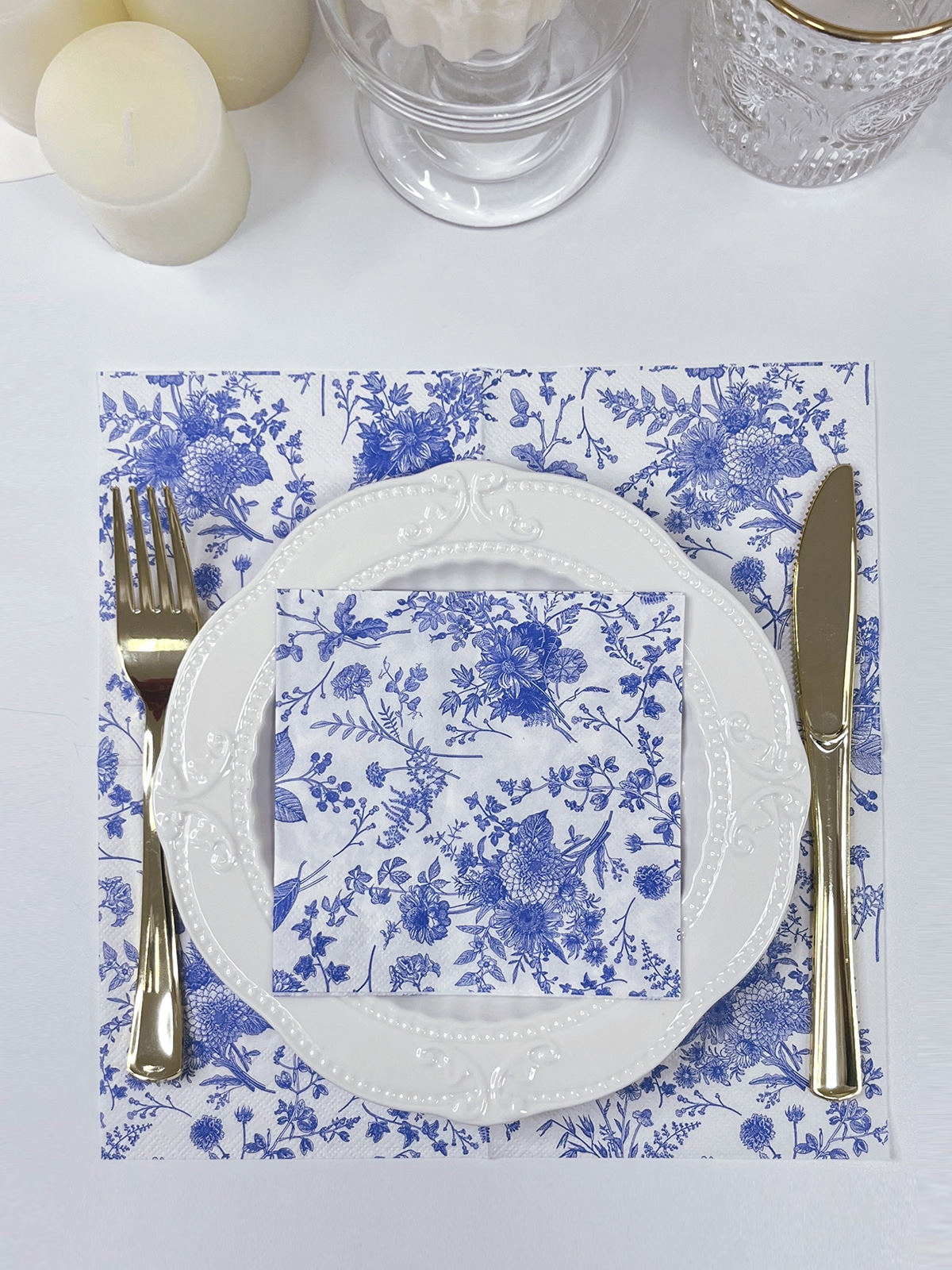
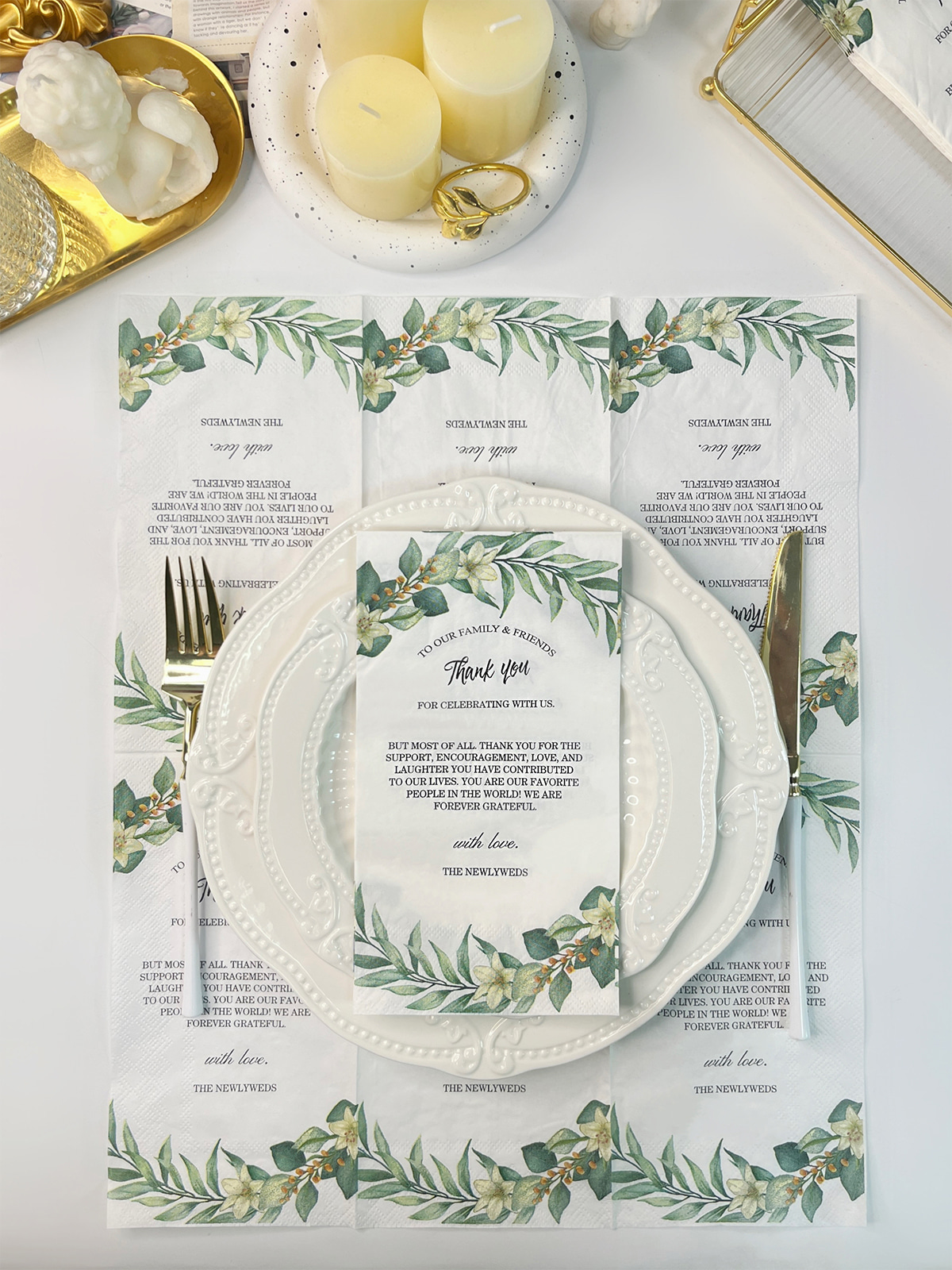
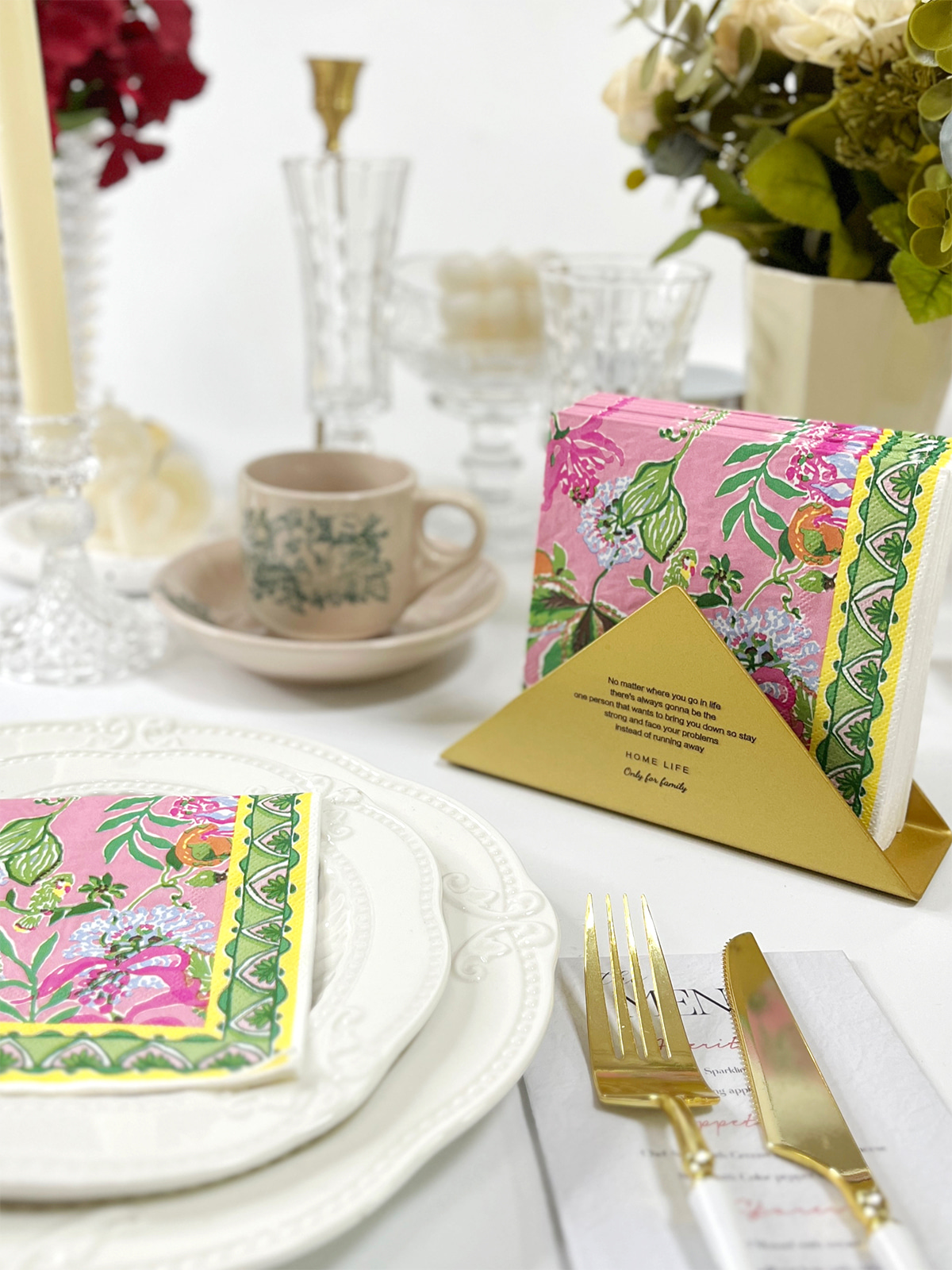
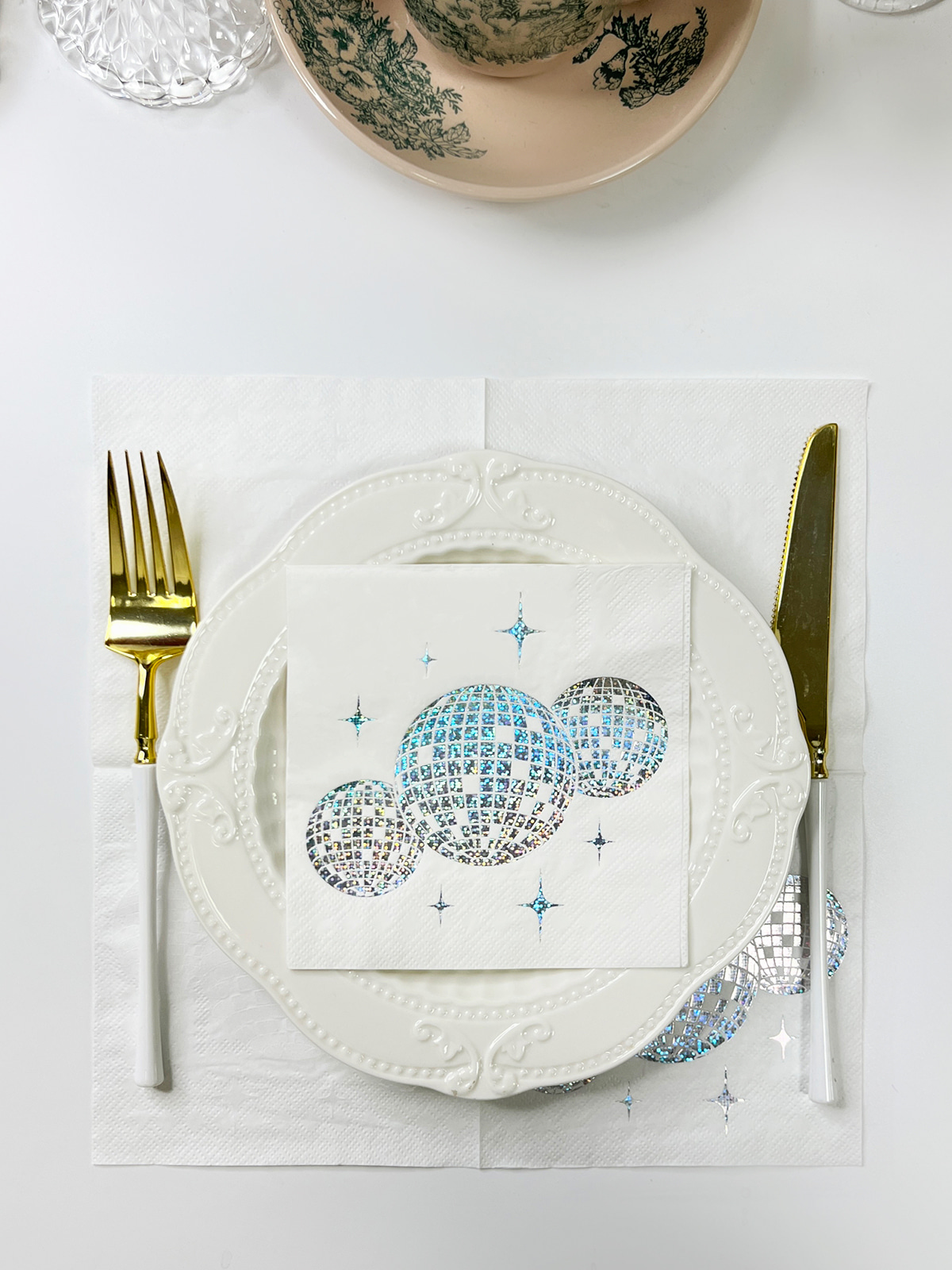
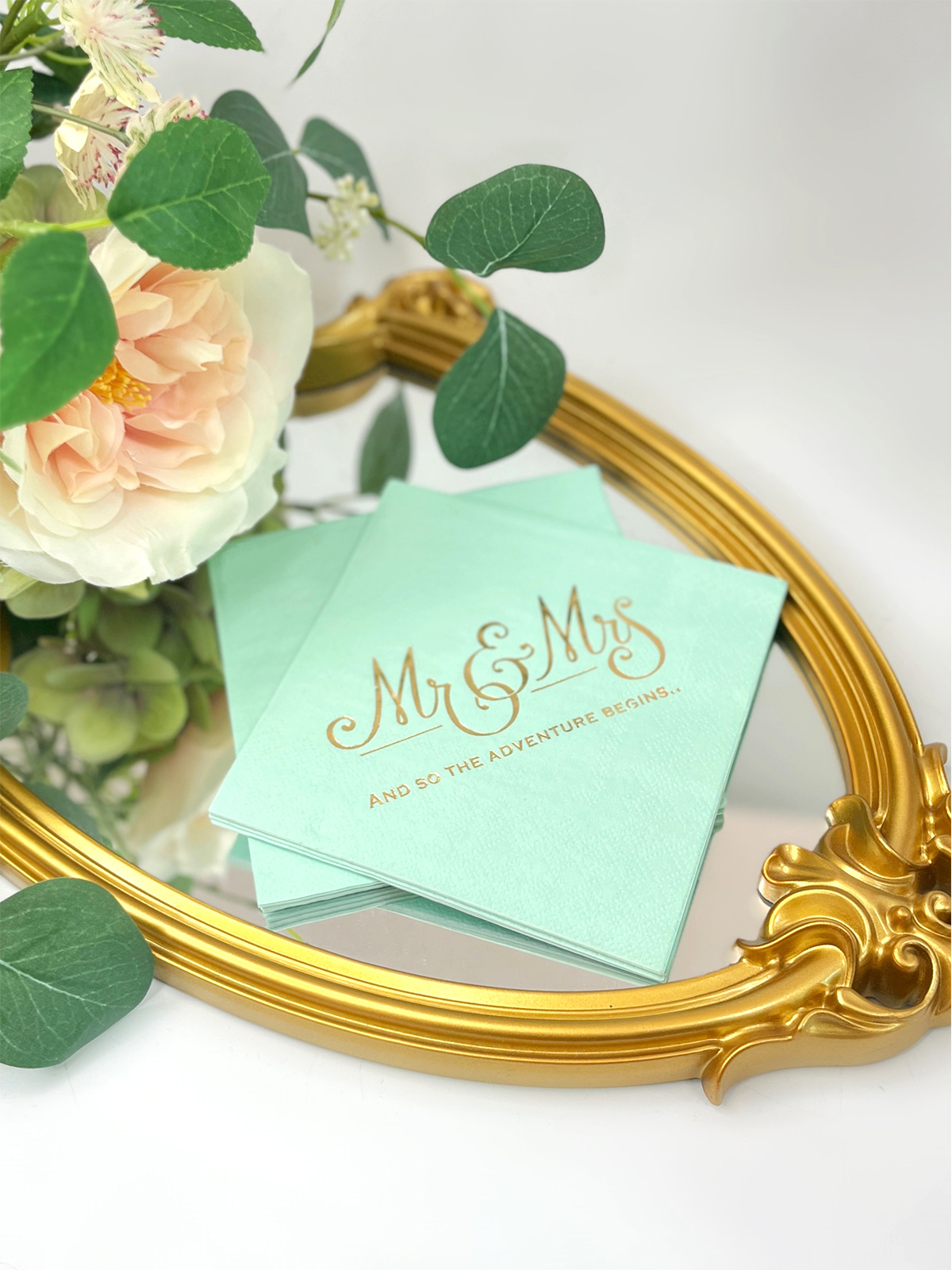
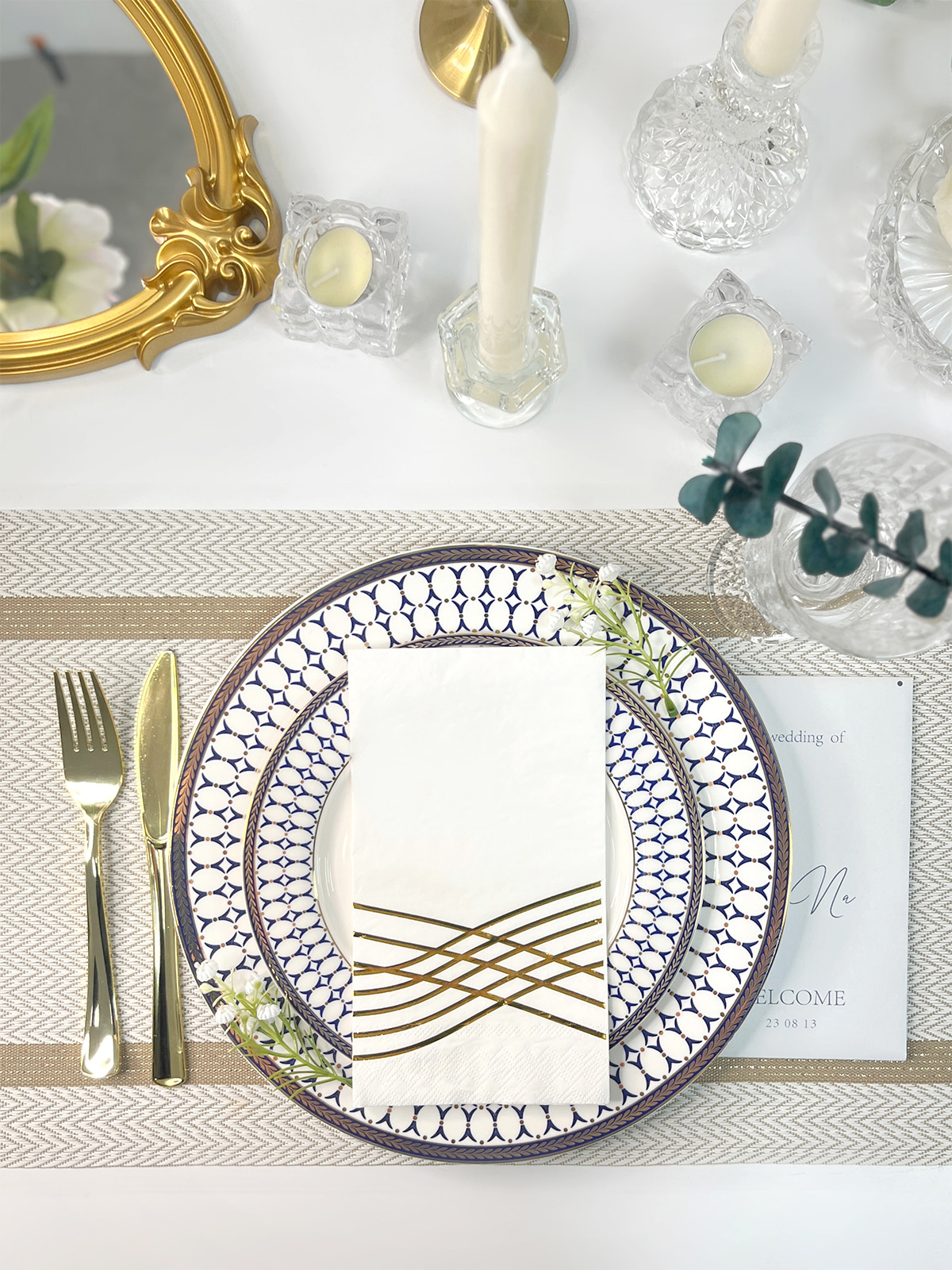
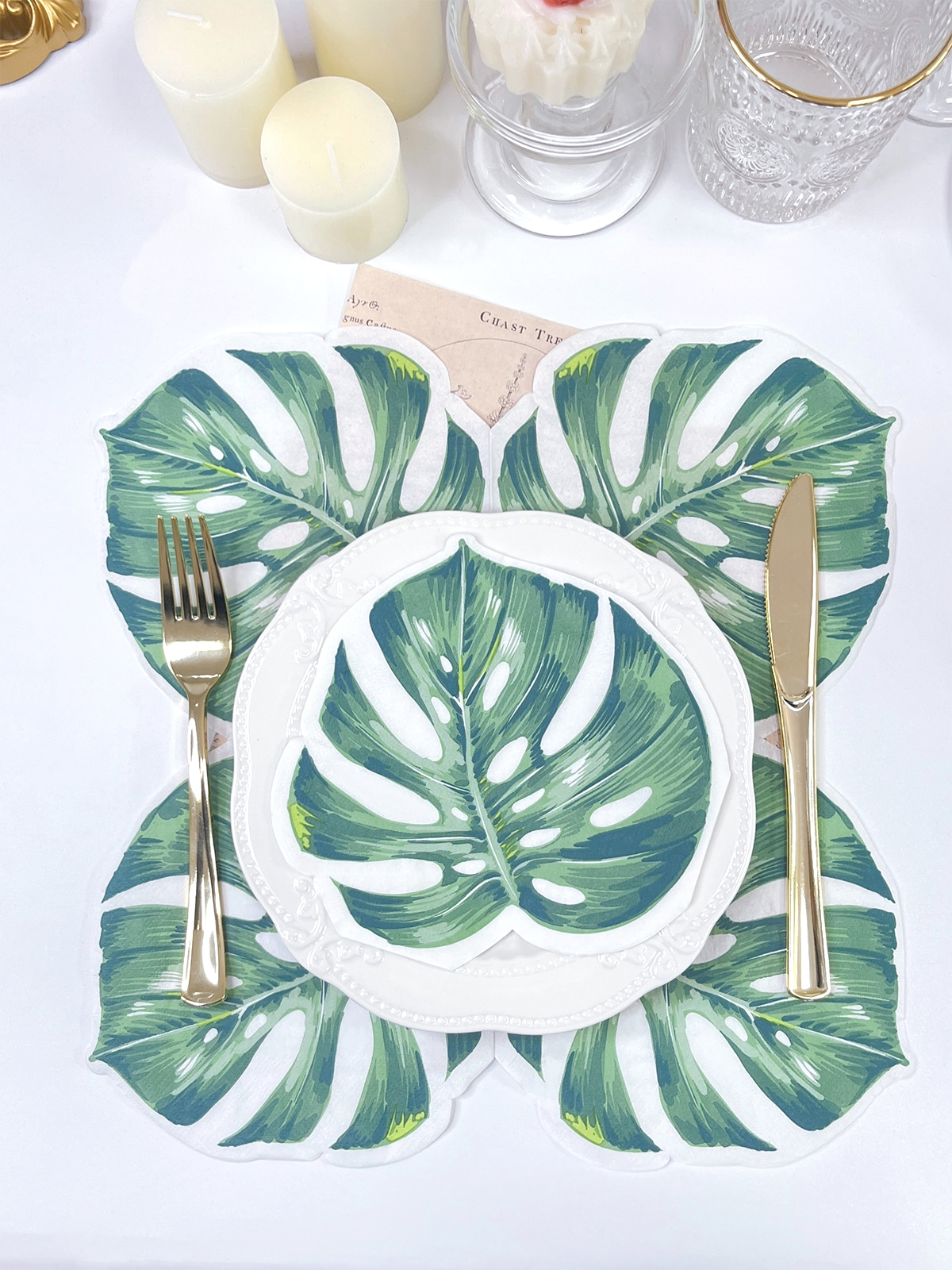
In many event spaces, attention rarely goes directly to table accessories at the beginning. People usually notice the whole table layout, then slowly shift their focus to smaller details that sit in front of them. Printed Table Napkins often belong to that second layer of attention, where they are seen but not immediately analyzed.
On a prepared table, napkins are usually placed in repeated positions. Because of that repetition, the eye starts to pick up a rhythm across the table surface without needing to consciously read each element. Over time, this repetition becomes part of how the table is visually understood.
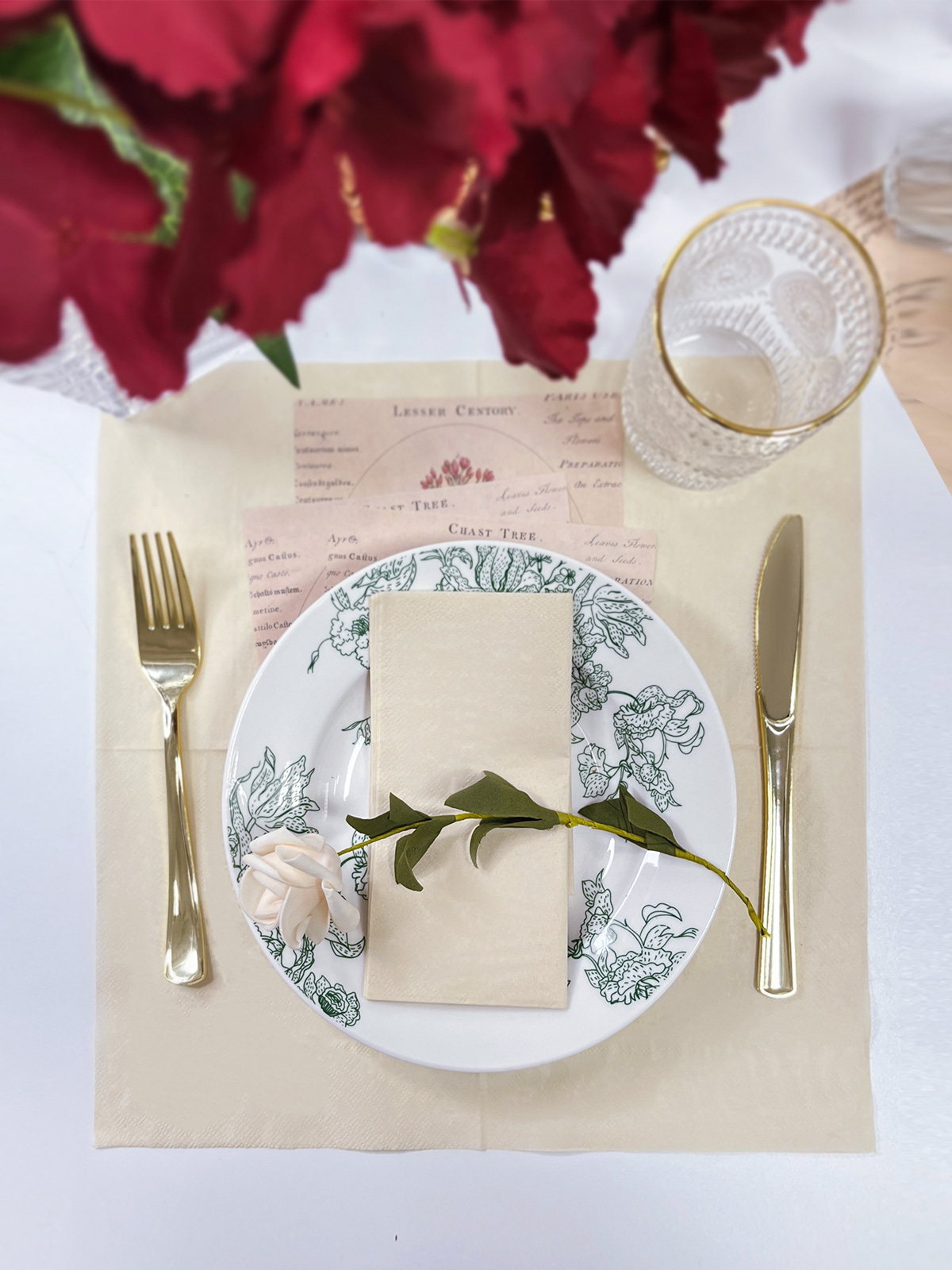
What stands out in real settings is not the napkin alone, but how it sits among plates, glassware, and empty space. Even when no one touches it, its presence completes part of the visual surface that guests face when they sit down.
Balance on a table is not always about symmetry in a strict sense. In many real arrangements, balance comes from how objects distribute attention across the surface. Napkins often play a quiet role in that distribution.
When placed across multiple seating points, similar visual elements begin to form a soft repetition pattern. The human eye tends to follow repeated shapes without effort, which means napkins naturally guide visual movement across the table.
In some setups, even a slight change in napkin placement can shift how the table feels. Not dramatically, but enough to change the rhythm of how the surface is read during seating.
Visual order on a table is rarely created by a single object. It comes from how different elements relate to each other in spacing, shape, and repetition. Printed Table Napkins usually sit inside this structure as repeated markers that break large surfaces into smaller, readable sections.
A simple comparison can help describe their role:
| Table Element | Visual Behavior | How It Is Perceived |
|---|---|---|
| Plates | Fixed central point | Anchors the seating position |
| Glassware | Vertical reflection | Adds height variation |
| Table surface | Continuous base layer | Connects all elements |
| Printed Table Napkins | Repeated surface detail | Creates rhythm across seating |
The napkin does not dominate attention, yet it prevents the table from feeling visually empty between main elements.
When guests sit down, the few seconds usually involve looking across the table without focusing on anything specific. During that short moment, the eye scans surface arrangement, spacing, and repeated elements.
Table Napkins become part of that scanning process. Because they are placed directly in front of each seat, they naturally enter the field of vision early. Even without interaction, their repeated presence across the table creates a sense of structure.
This early impression is not formed through detail analysis, but through overall pattern recognition. The brain reads repetition before it reads meaning, which is why consistent table elements often shape perception quietly.
In practical environments, Table Napkins are usually found in places where table arrangement follows a repeated seating structure. They are not limited to one specific environment, but their presence is more noticeable where tables are prepared in a consistent layout pattern.
Common situations include:
In all these cases, napkins become part of a repeated visual system rather than a single decorative point.
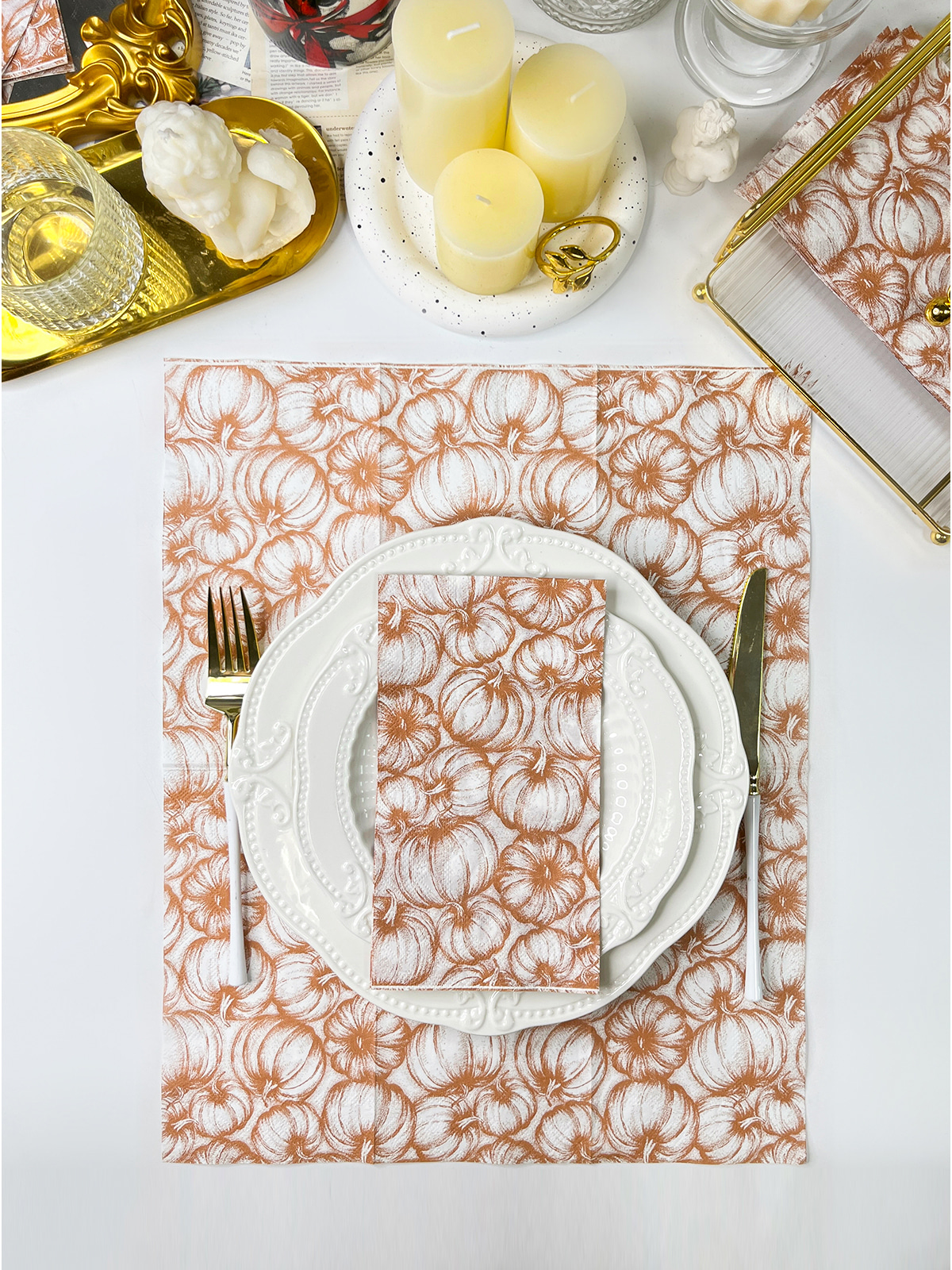
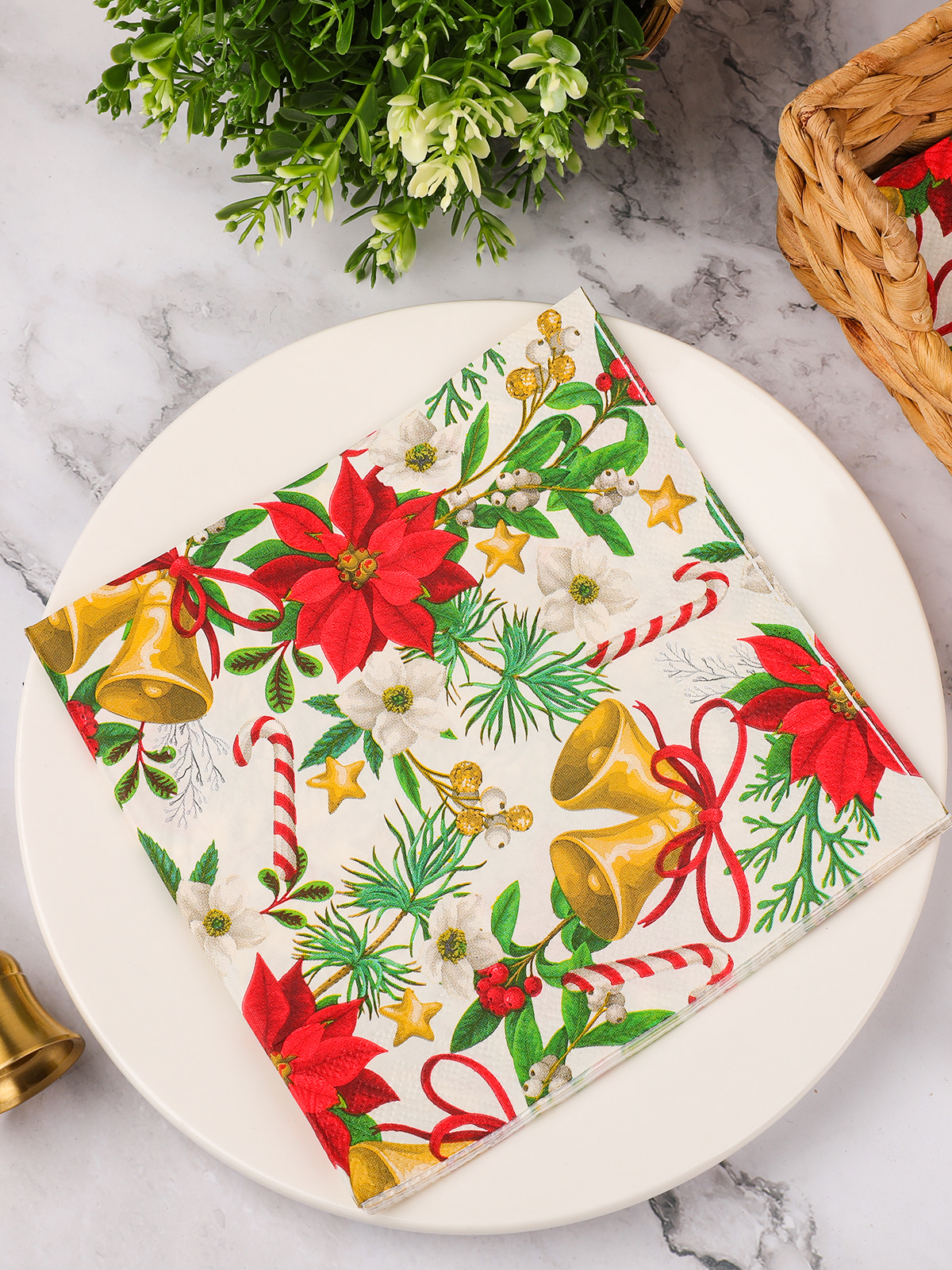
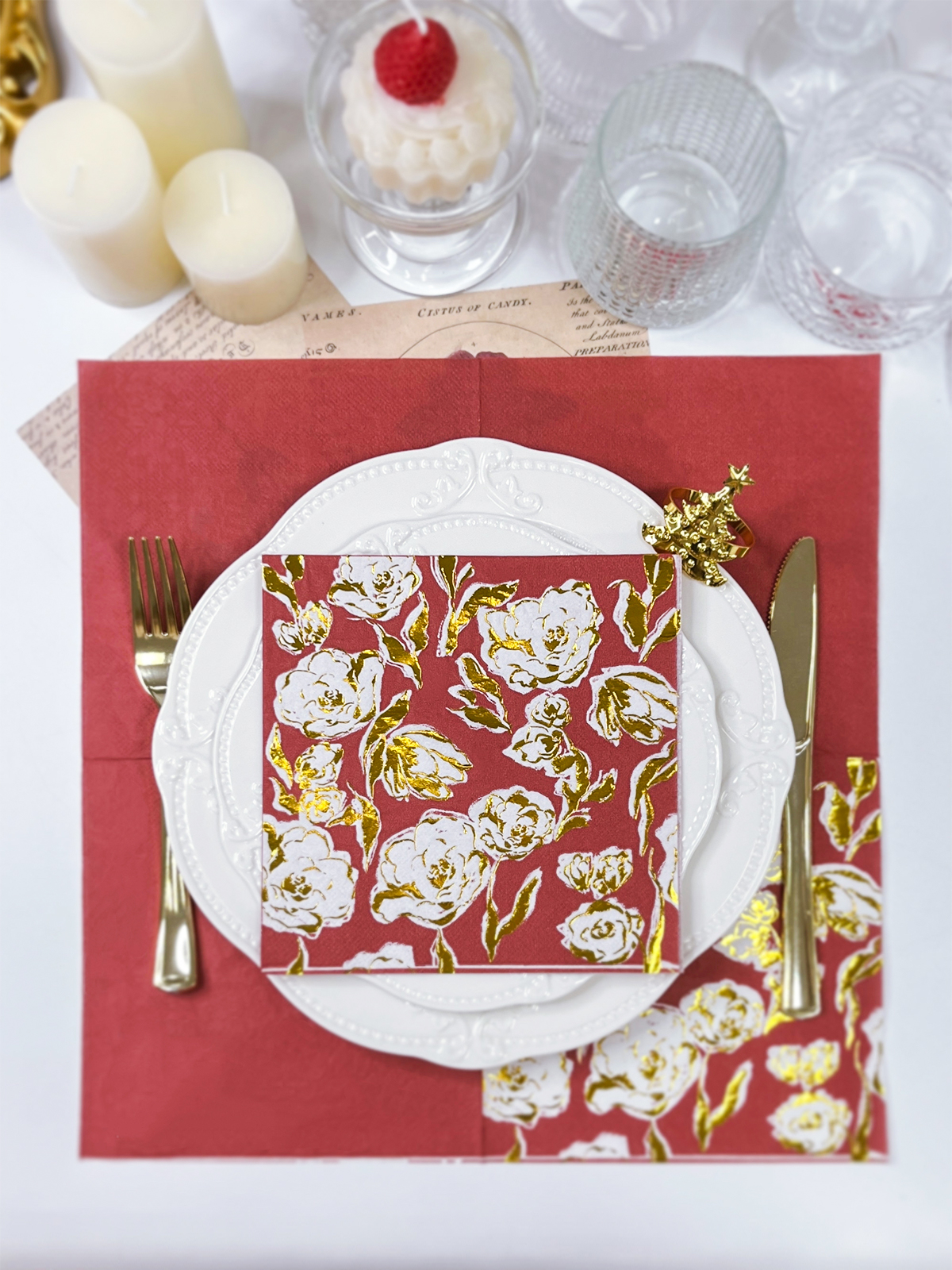
Printed Table Napkins do not always appear identical in every setting. The way print appears depends on how light falls on the surface, how the material folds, and how the napkin is positioned on the table.
In some cases, folded edges reduce visible printed area, leaving only partial patterns visible from above. In other cases, flat placement allows full design visibility, which changes how the table surface is read.
Surface texture also plays a role. Softer materials tend to absorb light differently, which slightly changes how printed colors appear under different lighting angles. These small differences are usually not noticed individually, but they influence overall table perception.
The material of Printed Table Napkins affects how they behave when placed, adjusted, or touched. Even before use, the way they fold and settle on a surface influences how stable the table layout feels.
Some materials hold structure more firmly, creating sharper folds that keep printed areas visible. Others rest more loosely, producing softer shapes that blend into the table surface more gently.
These differences do not change function in a dramatic way, yet they influence how organized or relaxed the table feels when viewed as a whole.
Once an event starts, table surfaces rarely stay in a fixed state. Chairs are adjusted, hands reach across different angles, and small service actions keep changing how objects sit on the surface. Printed Table Napkins remain in that environment without needing constant attention, yet their position and shape still respond to everything happening around them.
A napkin that was neatly folded at the beginning may later look slightly relaxed or shifted. Even so, it continues to sit inside the same visual rhythm of the table. What changes is not its role, more the way it blends with ongoing movement. In many real setups, this kind of quiet adjustment is expected rather than corrected.
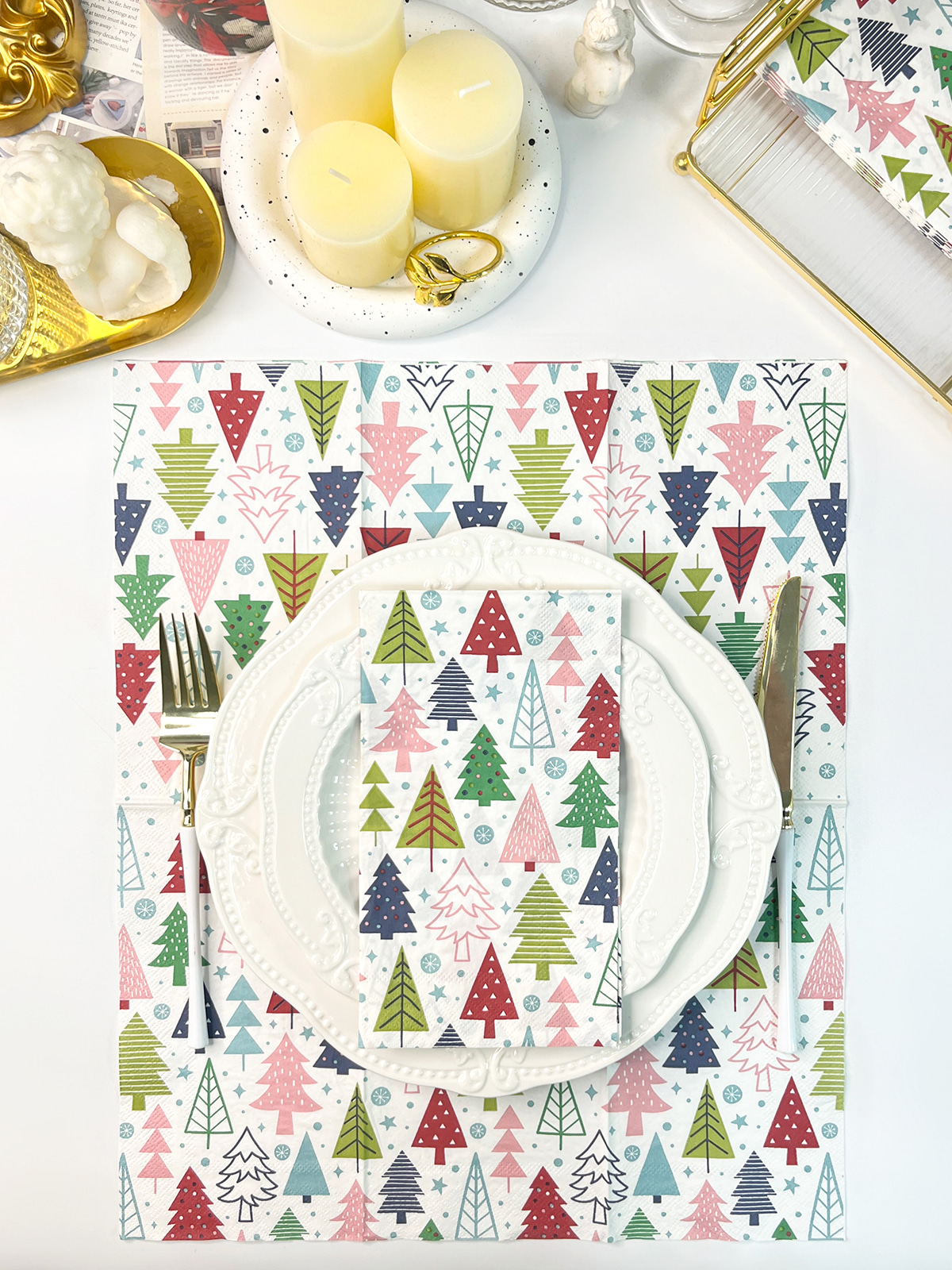
When Napkins are placed at every seating position, the table slowly develops a repeating pattern. The eye does not process each napkin separately. Instead, it reads the repetition as a continuous visual line across the surface.
This repetition is not about decoration alone. It works more like spacing logic. Without repeated elements, a table can feel visually uneven, even when everything is properly arranged. With repetition, the surface gains a steady rhythm that helps the layout feel connected from one seat to another.
In longer tables, this effect becomes more noticeable when viewed diagonally, where repeated napkins naturally guide the eye across the full length of the arrangement.
Lighting in event spaces is rarely stable across the entire table. Some areas receive stronger light, while others stay under softer illumination. Napkins respond to these changes in a quiet way that does not alter their function, only their appearance.
Under brighter light, printed details may appear more defined and structured. In softer light, edges can feel more blended into the surface material. Folding also plays a role, since angled surfaces reflect light differently compared with flat placement.
These variations are small, yet they influence how the table is visually read from different positions in the room.
In many event environments, tables are prepared more than once. After one cycle of use, surfaces are reset, and Printed Table Napkins are placed again in similar positions. Over time, this repeated action builds a familiar pattern that becomes part of the setup routine.
The placement does not feel forced. It becomes a natural step in arranging the table surface. Even when minor adjustments happen, napkins tend to return to similar spacing and alignment across seats.
This repetition helps maintain visual continuity between different phases of the event without requiring strict control over every detail.
Printed Table Napkins exist in a space where practical use and visual presence overlap. Before being used, they are part of the table’s visual structure. After use begins, they shift into functional interaction, yet still remain visible within the layout.
This dual nature gives them a stable role in event presentation. They do not rely on active attention to contribute to the table’s appearance. Even when partially folded or adjusted, they continue to occupy a consistent visual position within the arrangement.
In real settings, this balance between function and appearance is what allows them to remain part of the table composition throughout the entire event flow.
Even when Napkins are not perfectly aligned, the overall table structure usually remains visually stable. Slight differences in angle, fold depth, or spacing do not break the overall pattern, because repetition across multiple seats continues to hold the layout together.
Table presentation often depends more on consistency across the whole surface than precision in each individual placement. As long as napkins are present in a repeated pattern, the table keeps its visual coherence.
Printed Table Napkins remain a quiet but continuous part of event table presentation. Their influence is not built from attention or emphasis, but from repetition, placement, and presence across changing moments during the event.
They stay within the background of visual structure while still shaping how the table is perceived as a whole. Over time, that repeated presence becomes part of how the table feels when viewed, not as a single element, but as part of the full surface arrangement.
Related Products
Shopping for a reliable source of napkins?
Established in 2007 and located in Zhuji City, Zhejiang Province, Zhuji Furong Paper Products Co., Ltd. is a professional manufacturer of color-printed napkins. Enhance Your Event With Custom Printed Napkins.
Telephone
+86-15325932613
Address
Jianglong Industrial Park, Jiyang Street, Zhuji City, Shaoxing, Zhejiang, China.
Contact Us
Products
Contact Us
+86-15325932613
+86-575-87765556
+86-575-87765559
Jianglong Industrial Park, Jiyang Street, Zhuji City, Shaoxing, Zhejiang, China.
Party Printed Paper Napkins Manufacturer Customized Napkins And Paper Towels Factory
Copyright © by Zhuji Furong Paper Products Co., Ltd. Rights Reserved.

 English
 中文简体
中文简体