2026-08-31
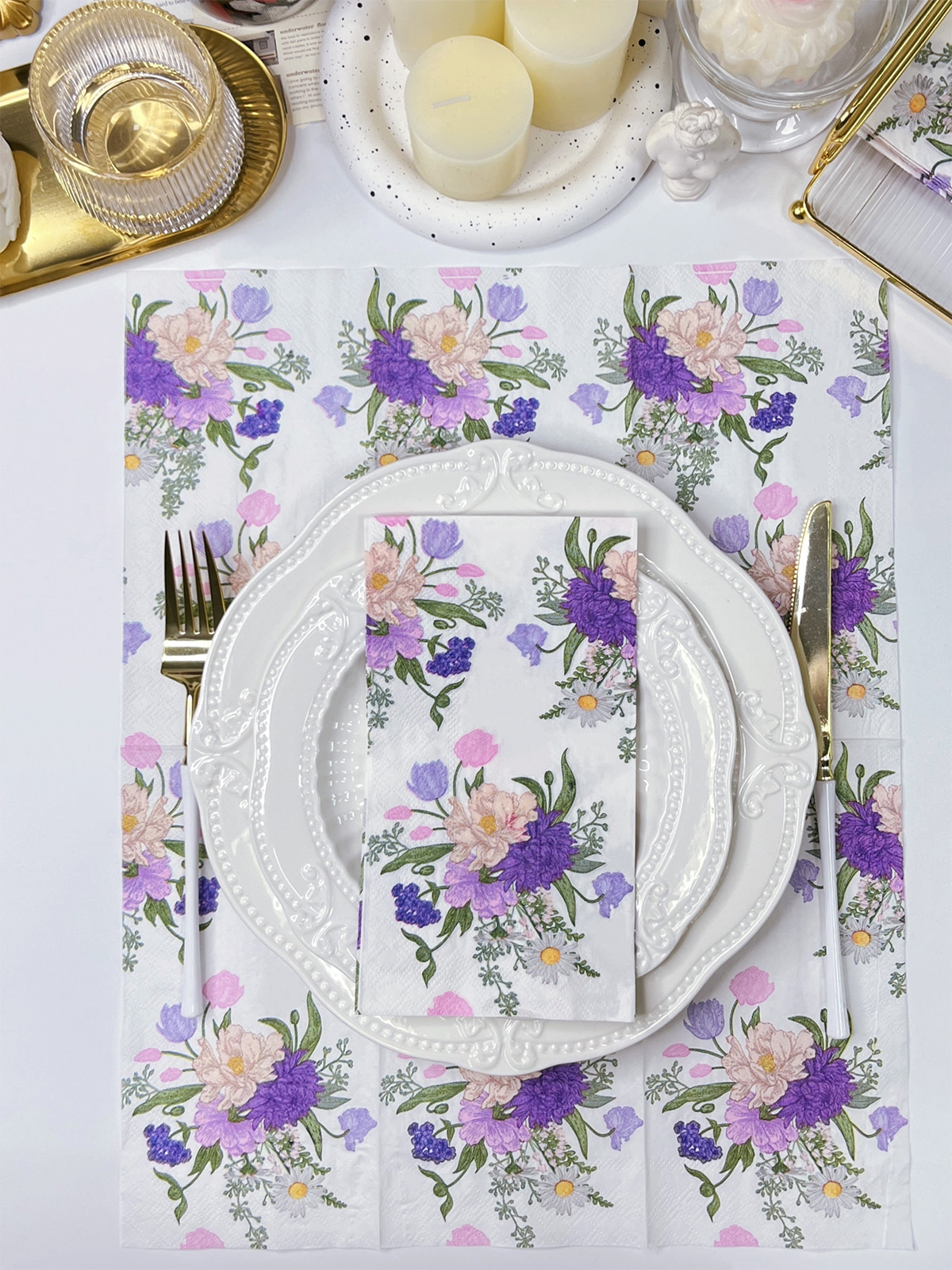
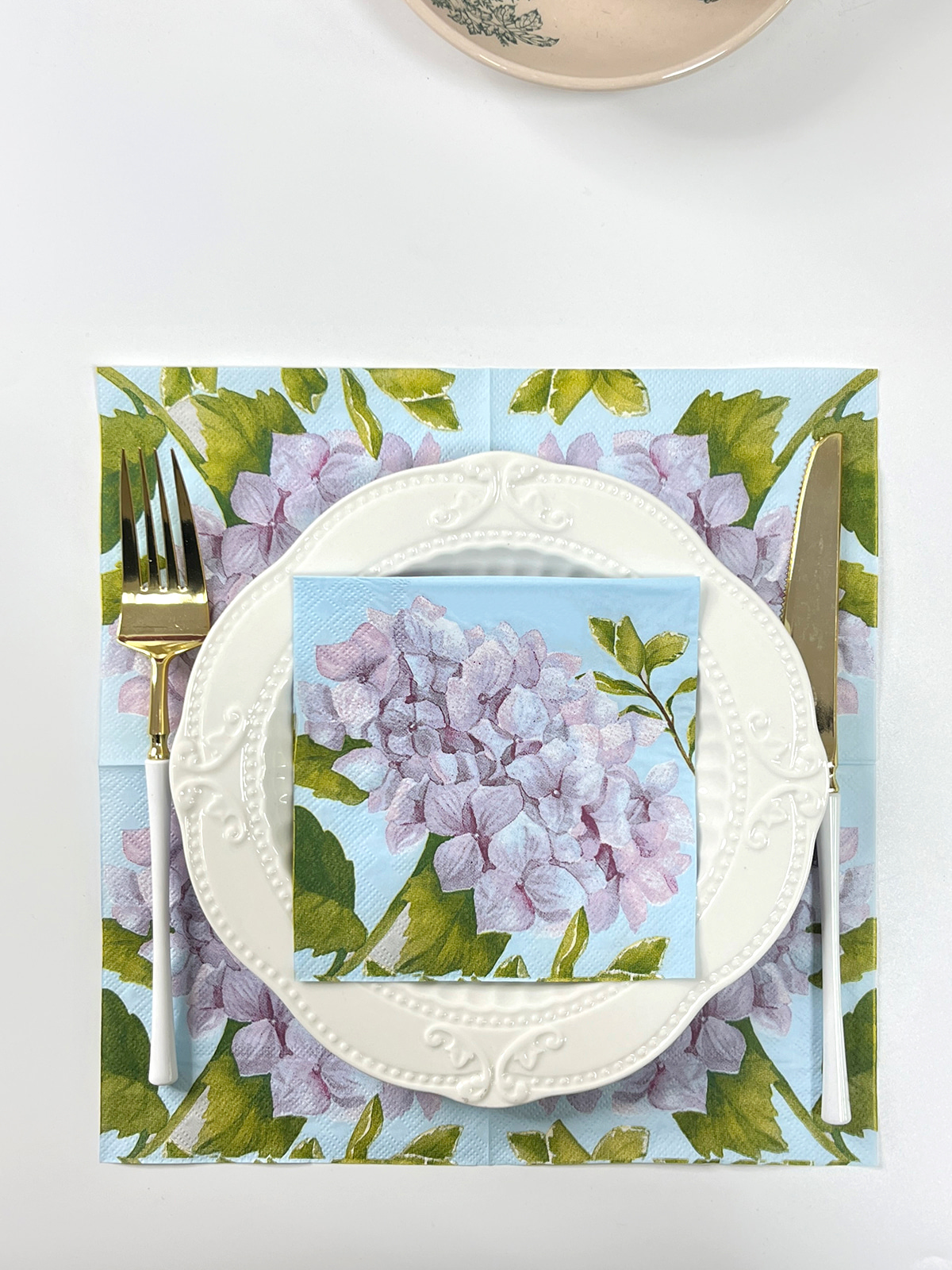
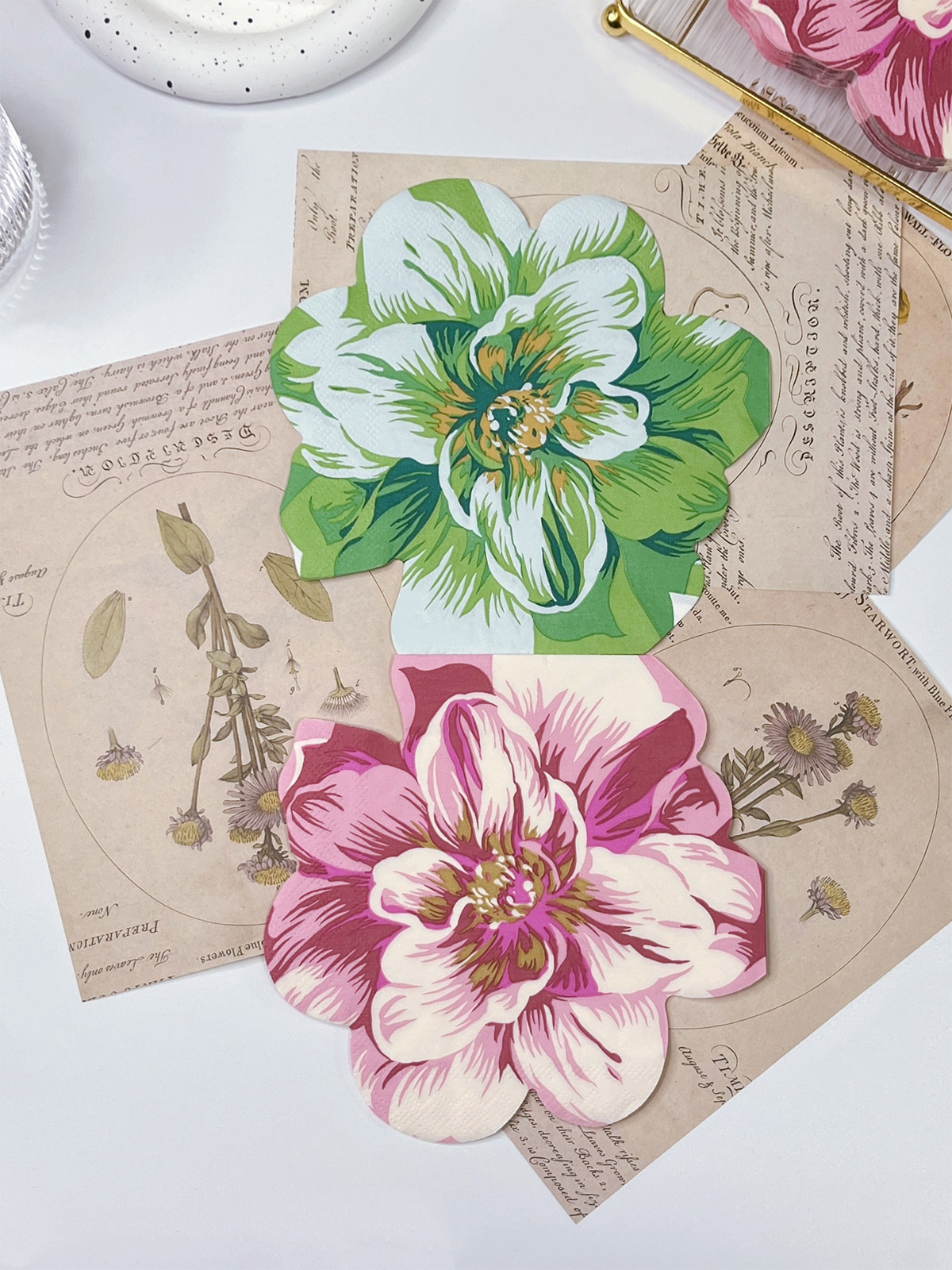
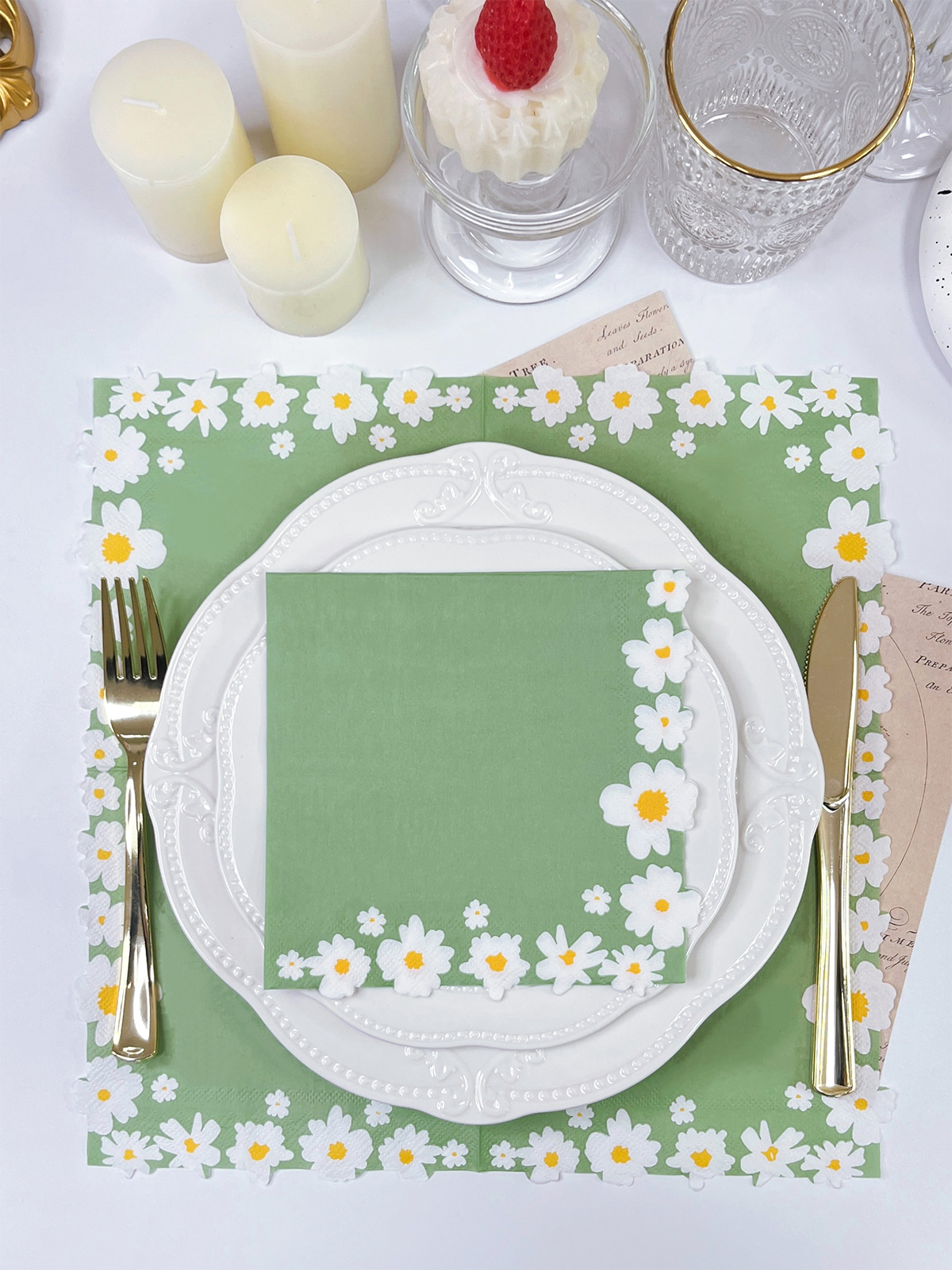
People in the foodservice and hospitality industries have been taking a closer look at their materials in recent years. Sustainability is no longer just a talking point—it shows up in purchasing decisions, supplier choices, and even how tables are set. One item that has drawn particular attention is the banquet paper napkin. It does not seem like a complicated product, but in formal dining situations, it plays a noticeable role. When a banquet hall is filled with tables, each set with napkins of a matching shade, the overall effect is clean and put together. If even a few napkins look off in color, that impression breaks.
Making that uniformity happen gets trickier when the napkins come from recycled stock instead of fresh pulp. Virgin fibers start out with a fairly predictable brightness. Recycled material does not. It has been through other lives—as office paper, as cardboard boxes, as printed flyers—and each of those lives left traces behind. Inks, coatings, and previous dyes all remain in small amounts, even after reprocessing. So for a Paper Napkin Factory, each load of recycled pulp brings its own personality. The equipment can handle that, but not by following the same recipe every single time.
What has emerged over time is a way of working that treats recycled fiber not as a problem to be fixed but as a material that needs its own handling rules. In banquet settings, where customers expect a polished look across every piece, this approach matters. The factories that do it well have built systems that respond to variation rather than trying to eliminate it entirely.
Content
To get a handle on why recycled stock creates color trouble, it helps to look at where it comes from. Recovered paper flows into recycling plants from all over. Offices send their waste. Printers return their offcuts. Households put out newspapers and magazines. Each of these sources brings a different shade to the mix. Some have undergone extensive bleaching; others have barely been processed at all. Some carry bright, stubborn inks that do not wash out easily. When all of that gets stirred together in a pulper, the result is a slurry that varies from batch to batch.
For the Paper Napkin Factory, this variation is not a minor detail. Even after the pulp goes through screening and cleaning, fine particles of ink and dye tend to cling to the fibers. That means every new shipment of recycled stock has its own faint color cast. One batch might lean slightly gray; another might have a hint of yellow or brown. For Banquet Paper Napkins, which often need to match a specific event color or coordinate with rented linens, that baseline uncertainty cannot be ignored.
There is another layer to the challenge. Repeated recycling changes the fibers themselves. Each cycle makes them shorter and less flexible. Shorter fibers absorb water and dyes at a different rate than longer, fresher ones. So even if two batches of recycled pulp looked exactly alike in shade, the way they take up color could still differ. A standard dye formula might work beautifully on one run and fall short on the next, simply because the fibers are not behaving the same way. What this boils down to is that color control on recycled stock has to be active and adaptive, not passive and fixed.
Factories that handle recycled stock well usually start each batch with a measurement. Before any significant amount of dye goes into the system, a sample of the pulp gets checked for its current shade profile. Instruments that read reflectance and undertone provide the numbers that guide the next steps. That reading tells the operators what they are working with—whether the pulp is neutral enough to take the target color directly or whether it needs some compensation first.
Once that baseline is known, the dye recipe gets adjusted on the spot. If the pulp has a yellowish cast, for instance, the dye mixture might be tweaked to cancel that out before building toward the final banquet napkin color. This kind of adjustment does not require guesswork; it follows a set of established correction curves that the factory has developed over many batches. The point is to make the end result look the same even though the starting material is not.
Choosing the right dyes also makes a difference. Some dye types bond well with cellulose fibers and give even, consistent coverage under normal conditions. But recycled pulp is not normal conditions—it contains residual inks and other particles that can get in the way. Dyes that work fine on virgin fiber may produce blotchy or dull results on recycled stock. So many factories opt for dye formulations that have been tested specifically for recycled applications. These dyes are selected because they can handle the variability without losing their effectiveness.
| Pulp Characteristic | Effect on Color Application | Factory Response |
|---|---|---|
| Varying baseline brightness | Shifts the final shade if not corrected | Adjust dye formula at start of batch |
| Residual ink particles | Causes uneven spots or dulling | Enhanced cleaning; use of dyes that are less sensitive to contaminants |
| Shorter fiber length | Alters dye absorption rate | Modify dwell time and dye concentration |
| Inconsistent moisture content | Affects dye penetration depth | Calibrate initial pulp moisture before dye addition |
Once the dye formulation has been tailored to the incoming pulp, the real work begins on the production floor. Applying color to recycled stock is not a one‑step affair. The dye has to penetrate evenly, bond with the fibers, and stay put through subsequent processing. Each stage of the line offers opportunities for color to drift, and each stage also offers chances to correct it.
In a typical setup, the dye is introduced either at the wet end of the paper machine or during the size‑press section. Wet‑end addition means the dye mixes with the fiber slurry before the sheet is formed. This approach allows for good penetration, but it also means the dye has to compete with everything else floating around in the pulp. Fillers, fines, and contaminants all affect how much dye actually attaches to the fibers. Size‑press application, on the other hand, puts the dye onto the surface of a formed sheet. That method gives better control over the final shade, but it requires the sheet to be uniformly absorbent—something recycled stock does not always offer.
Factories handling Banquet Paper Napkins often use a combination of both approaches. A base color gets built into the sheet at the wet end, and fine adjustments happen at the size press. That layered strategy provides some insurance against the variability that recycled fibers bring.
These adjustments are not made arbitrarily. They come from observation and from data collected during the initial pulp evaluation. Operators watch for signs of uneven take‑up—streaking, mottling, or lighter edges—and respond with small changes to machine settings.
Another consideration is the water quality used in the process. Recycled pulp often carries dissolved ions from its previous uses, and those ions can interfere with dye‑fiber bonding. Some factories adjust the pH or add mild conditioning agents to create an environment where the dye can do its work without competition from unwanted chemicals.
After the paper has been formed, dyed, and dried, it still has to pass through a series of checks before becoming banquet napkins. Quality control in this context is not limited to pulling a few finished napkins off the line at the end. It happens continuously, woven into the production flow.
In‑line monitoring systems are common in modern facilities. These use spectrophotometers positioned along the line to measure the developing shade as the paper moves forward. If the color starts to drift—even by a small amount—the system flags it immediately. Operators can then make real‑time corrections to dye feed rates or other parameters before a whole run goes off‑target. This kind of immediate feedback is valuable because recycled stock can change character within a single batch. A shift in pulp consistency midway through the run might otherwise go unnoticed until too late.
Visual checks still have a place too, especially for detecting subtle surface issues that instruments might miss.
Setting the acceptance standard is another piece of the puzzle. Banquet napkins are expected to look uniform to the human eye, but that does not mean every single napkin must be an exact clone. For recycled stock, factories often work with a defined tolerance range. Napkins that fall within that range are considered consistent enough for banquet use. The range is narrow enough that no one at the table would notice a difference, but wide enough to accommodate the natural variation that comes with recycled fibers.
For instance, if the target color is a warm ivory, napkins that lean slightly cooler or slightly warmer within an acceptable band still pass inspection. What matters is that the overall impression across a thousand napkins remains cohesive. This pragmatic approach allows the factory to deliver a reliable product without rejecting large quantities over minor deviations.
Batch identification also supports quality efforts. Each run of recycled pulp gets logged with its unique characteristics and the adjustments made during processing. That record becomes useful later—if a customer raises a question about a particular order, the factory can trace back to exactly what happened during that run. Over time, these records help refine the color‑matching process, as patterns and correlations between pulp sources and outcomes become clearer.
There is also a human element to quality assurance. Experienced operators develop an eye for what acceptable consistency looks like on recycled stock. They can spot a batch that, while within instrument tolerances, just does not look right to the trained observer. Their judgment, combined with instrument data, creates a dual‑layer verification that catches issues either side might miss alone.
Achieving consistent color on recycled banquet napkins has become a practiced skill rather than a distant ideal. The process starts with accepting that recycled stock will never arrive at the factory in a uniform state. From that acknowledgment flows a whole set of responses—measuring the incoming pulp, adjusting dye formulations, modifying production parameters, and monitoring every step of the way.
What makes it work is the combination of adaptive technology and practical experience. Instruments provide the numerical data; operators provide the judgment. Together, they create a system that turns variable raw material into a finished product that meets banquet standards. The shift in thinking has been gradual but significant. Where once recycled fiber was seen as a compromise, it is now handled with the same seriousness as virgin material, just with different rules applied.
Production facilities have learned that color consistency on recycled stock is not about finding a single solution. It is about building a flexible process and trusting the people and tools that manage it. Banquet napkins produced this way carry the same visual reliability as those made from new fibers, while supporting the environmental goals that drive the industry forward. The approach is neither simple nor automatic, but it has become part of how paper napkin factories operate in an era where sustainable inputs are increasingly the norm rather than the exception.
Related Products
Shopping for a reliable source of napkins?
Established in 2007 and located in Zhuji City, Zhejiang Province, Zhuji Furong Paper Products Co., Ltd. is a professional manufacturer of color-printed napkins. Enhance Your Event With Custom Printed Napkins.
Telephone
+86-15325932613
Address
Jianglong Industrial Park, Jiyang Street, Zhuji City, Shaoxing, Zhejiang, China.
Contact Us
Products
Contact Us
+86-15325932613
+86-575-87765556
+86-575-87765559
Jianglong Industrial Park, Jiyang Street, Zhuji City, Shaoxing, Zhejiang, China.
Party Printed Paper Napkins Manufacturer Customized Napkins And Paper Towels Factory
Copyright © by Zhuji Furong Paper Products Co., Ltd. Rights Reserved.

 English
 中文简体
中文简体