2026-08-26
Packing may seem like a simple final step, although folded paper products pass through several points of contact before they reach an outer package. Sheets move against one another, folded edges press together, and decorated areas can rub against nearby surfaces. Repeated movement creates conditions where marks begin to appear on printed or foil decorated sections.
Foil Printed Napkins can be more sensitive to visible rubbing because metallic decoration reflects light from the surface. A small mark that might be difficult to notice on ordinary printed paper can become easier to see when light crosses a shiny decorative area. Scratches, dull patches, uneven edges, or small transfers may therefore become noticeable during folding and packing.
The problem does not always begin with rough handling. Normal movement can create enough contact to affect a delicate surface when pressure and friction occur repeatedly. Folding equipment, stacking operations, manual packing, and movement inside cartons all create different forms of contact.
Paper texture plays a role as well. A soft napkin surface can compress under pressure, allowing one decorated area to touch another section more closely. When sheets slide across one another, small particles or uneven fibers can increase rubbing. A printed surface may gradually lose its clean appearance when contact continues throughout the packing process.
For manufacturers, scuffing is therefore not simply a printing issue. Surface condition, folding, stacking, coating, and packing methods are connected. A coating intended to protect the decorative surface needs to remain flexible enough for the napkin to fold naturally while providing enough resistance against ordinary rubbing.
Content
Foil decoration creates a surface that behaves differently from ordinary ink. Rather than becoming part of the paper through absorption, foil remains as a distinct decorative layer on the sheet. Contact between decorated areas can therefore create visible changes when the surface is repeatedly rubbed.
During packing, several types of contact may occur:
Scuffing develops when contact becomes strong or frequent enough to disturb the surface. A metallic area may lose part of its visual uniformity, while small sections around edges may appear less clean. Fine decorative details can require particular care because narrow areas have less surface coverage and may react differently to repeated rubbing.
Moisture can add another concern. A damp surface may behave differently from a dry one, especially when several sheets remain in close contact. For that reason, surface protection cannot be considered separately from the material environment around the finished napkin.
Coating provides one method of reducing direct surface damage. Rather than allowing the decorative layer to receive every point of contact directly, a suitable protective layer can create a more resistant outer surface. The coating still needs to follow the movement of soft paper, since a rigid surface may crack or separate when the napkin is folded.
A protective coating works mainly by creating a controlled surface between the decoration and surrounding materials. When two surfaces move against each other, friction can disturb the printed layer or create visible marks. A suitable coating changes how that contact takes place.
Surface smoothness matters because uneven areas can create concentrated contact points. A consistent protective layer spreads contact more naturally across the decorated area, reducing the chance that one small section receives repeated pressure.
The coating also needs enough flexibility for normal folding. Napkins are not rigid packaging sheets. They bend, compress, unfold, and change shape during handling. A surface treatment that protects the decoration while remaining flexible can follow those movements with less stress on the foil layer.
Another consideration is adhesion. The protective layer must remain attached to the surface beneath it. Poor contact between layers can create peeling or uneven areas, which may become more visible after packing. Industry observations on printed paper products also indicate that protective treatments need to match the paper, printing layer, and later processing conditions rather than being selected as an isolated step.
For Foil Printed Napkins, a useful coating approach therefore involves several related qualities:
| Coating Characteristic | Role During Packing | Possible Surface Concern |
|---|---|---|
| Smooth surface | Reduces rough contact | Uneven rubbing |
| Flexible structure | Follows folding movement | Cracking during folding |
| Stable adhesion | Keeps coating attached | Peeling or lifting |
| Surface resistance | Helps reduce visible scuffing | Marks from repeated contact |
| Paper compatibility | Supports consistent contact | Uneven finish |
No single property works independently. A smooth surface may still perform poorly when the coating becomes brittle, while a flexible layer may offer limited protection when surface resistance is too low.
Coating selection begins with the condition of the finished napkin rather than the decorative effect alone. A surface treatment needs to protect the foil while preserving the soft character expected from a paper napkin.
Flexibility is one important consideration. Folding creates continuous changes in the paper surface, particularly around corners and folded edges. A coating that moves with the sheet can reduce stress placed on the decorative layer. Excessive stiffness can create another type of surface problem because the protective film may resist bending.
Surface resistance matters during stacking and packing. When several folded napkins remain together, pressure can keep decorative areas in contact. Movement during packing can then create rubbing across the same locations. A coating with suitable resistance can help the decorated area tolerate ordinary contact without becoming visibly dull.
Adhesion deserves attention as well. Foil itself depends on proper attachment to the paper surface, while a protective coating adds another layer that must remain connected.
Paper feel should remain part of the decision. A napkin exists for handling and use, so surface protection cannot be considered only from a durability perspective. Excessive surface treatment may change how the paper bends or feels. Production therefore requires a balance between protection, flexibility, appearance, and normal handling characteristics.
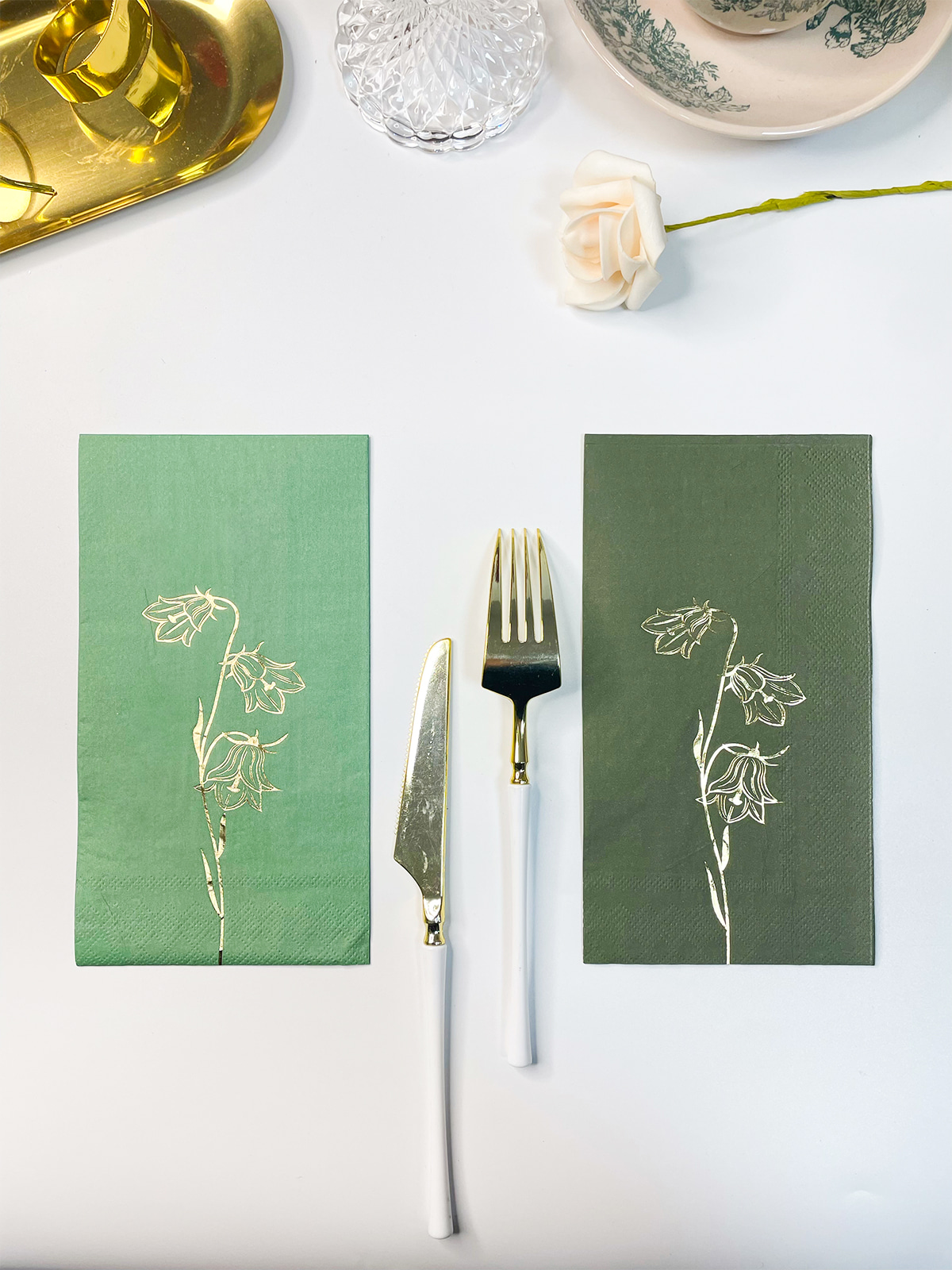
A coating does not work in isolation. Paper, foil, printed areas, adhesive layers, and finishing treatment interact throughout production. Changing one surface condition can influence how another layer behaves.
Paper provides the foundation. Its texture and absorbency influence how decorative materials attach and how a protective layer spreads across the surface. A relatively even paper surface can support more consistent contact, while irregular texture may leave small areas with different levels of protection.
Foil also needs a compatible surface. Industry production guidance notes that foil decoration depends on close contact between the foil layer and paper, while differences in paper texture can affect how smoothly decorative material transfers.
After foil application, coating introduces another interaction. A protective layer that does not bond well may become a weak point during folding. A layer that is too rigid may interfere with flexibility. A coating that changes the surface too much can affect the way folded napkins sit against one another during packing.
For a Paper Napkin Factory, controlling scuffing therefore starts before the final package is formed. Paper preparation, foil application, surface treatment, folding, and packing need to work as connected stages. When each stage is considered separately, a surface problem may only become visible after the product has already reached the packing process.
The practical focus is not simply adding more coating. The more useful approach is choosing a surface treatment that fits the paper structure, decorative area, folding method, and expected packing conditions.
Paper texture has a direct effect on how folded napkins touch one another. A smoother surface tends to create more even contact, while a rough or uneven surface can produce small pressure points around fibers and raised areas. During repeated movement, such contact may leave marks on nearby decorative sections.
Foil Printed Napkins contain both paper and a decorative surface, so the condition of the paper underneath still matters. A coating cannot completely compensate for an unsuitable paper surface. When the base material changes from one production run to another, the same coating may behave differently during folding and packing.
Paper softness also affects compression. Once several folded pieces are stacked together, pressure can flatten parts of the surface. A foil area placed close to a fold may then come into contact with another sheet. Repeated movement around the folded section can gradually affect the appearance.
For production planning, several points deserve attention:
Careful control at the paper stage can reduce the amount of work required later. Surface protection works more naturally when the material beneath it already provides a stable base.
Scuffing often becomes noticeable after printing because packing introduces movement that does not exist while the printed sheets are lying flat. Folding changes the shape of the paper, stacking brings decorated areas closer together, and handling creates short periods of sliding.
Pressure is one common factor. A tightly arranged stack can keep surfaces pressed together for a longer period. Once movement occurs, contact becomes more active. Foil areas located on outer folds or raised sections may receive greater rubbing than areas protected inside the folded structure.
Packaging material can influence the result as well. A rough inner surface may create more friction against the napkin. Smooth packaging does not remove every risk, since movement between individual napkins can still produce contact.
The order of packing operations matters too. When folded napkins are moved several times before entering the final package, each handling stage creates another opportunity for surface contact. Reducing unnecessary movement can therefore support surface appearance without changing the printed design.
Storage conditions can influence the situation as well. Changes in moisture may alter paper softness and surface behavior. A protective coating needs to remain stable while the paper changes slightly during normal handling.
Scuffing control works better when inspection takes place at several stages rather than only after printing. A finished surface may look clean immediately after decoration, while marks can appear later during folding or packing.
A Paper Napkin Factory can pay attention to the following production points:
Before printing
Check the paper surface for unusual roughness, loose fibers, or uneven areas. A stable base gives later surface treatment a more predictable working condition.
After foil application
Inspect decorative edges and larger foil sections. Areas with weak attachment may become more vulnerable during later movement.
After coating
Look for uneven coverage, surface changes, or areas that feel noticeably different from surrounding paper. A coating should form a consistent protective layer without interfering with normal folding.
After folding
Inspect the sections around folds and corners. Such areas experience movement during forming and may show early signs of rubbing.
After packing
Open a sample of packed napkins and examine surfaces that were pressed together. Checking the product after packing gives a more realistic picture of how the coating performs during the complete production process.
A simple production record can help connect surface problems with their possible source. For example, marks appearing only after folding may point toward folding pressure or contact, while uneven coating visible before folding may indicate an earlier surface‑treatment issue.
Foil designs do not all place the same demands on a napkin surface. A broad decorative area can behave differently from a fine pattern made from narrow lines. Position matters as well. Decoration close to a fold may experience more movement than a design located on a relatively flat section.
Large foil areas may require careful attention to surface contact because more decorated material can touch nearby sheets during stacking. Fine patterns create another concern around narrow edges, where small areas can become noticeable when rubbing occurs.
Design placement can therefore influence coating decisions. A decorative section crossing a fold needs enough flexibility to follow the paper movement. A design placed on a flat area may experience less bending, although stacking and sliding can still create contact.
| Foil Design Condition | Main Packing Concern | Production Focus |
|---|---|---|
| Broad foil area | Surface‑to‑surface contact | Even protective coverage |
| Fine decorative lines | Edge rubbing | Stable foil attachment |
| Design near folds | Repeated bending | Flexible surface treatment |
| Raised decorative section | Local pressure | Controlled folding |
| Mixed print and foil | Different surface behavior | Layer compatibility |
Such differences make coating selection a production decision rather than a fixed formula. Paper type, decoration position, folding structure, and packing method all influence the final result.
A visual inspection under normal lighting can reveal obvious rubbing, although some surface changes become easier to notice when the napkin is viewed from different angles. Metallic decoration reflects light differently from plain paper, so uneven areas may appear as changes in brightness rather than clear scratches.
Inspection after folding is useful because the folded form creates the same type of contact that occurs during packing. Checking a flat printed sheet alone cannot show how the decorative surface behaves once several layers are pressed together.
A practical check can include:
Testing should reflect actual production conditions as closely as possible. A coating may perform well on a flat sheet and still behave differently after folding. Realistic handling gives production staff a clearer indication of whether surface protection is suitable for the finished format.
Surface protection is becoming more closely connected with the complete production process. Printing, foil application, coating, folding, and packing cannot be treated as unrelated operations when appearance needs to remain consistent through handling.
For Foil Printed Napkins, coating selection is therefore only one part of scuffing control. Paper condition creates the foundation, foil attachment affects surface stability, folding changes contact points, and packing determines how much movement occurs after production.
A practical production approach places attention on the complete path from paper preparation to packed goods. When surface problems appear, checking only the coating may not reveal the actual cause. The source can also involve paper texture, foil attachment, folding pressure, stacking conditions, or packaging contact.
Such a process‑based approach gives manufacturers more room to adjust production according to different napkin structures and decorative layouts. Rather than relying on a single treatment for every product, coating characteristics can be matched with the material and packing conditions involved.
For Foil Printed Napkins, preventing scuffing during packing is therefore closely related to controlling surface contact. A suitable coating can reduce direct rubbing, while careful paper selection, stable foil attachment, appropriate folding, and controlled packing help maintain the appearance of the finished napkin through normal handling.
Related Products
Shopping for a reliable source of napkins?
Established in 2007 and located in Zhuji City, Zhejiang Province, Zhuji Furong Paper Products Co., Ltd. is a professional manufacturer of color-printed napkins. Enhance Your Event With Custom Printed Napkins.
Telephone
+86-15325932613
Address
Jianglong Industrial Park, Jiyang Street, Zhuji City, Shaoxing, Zhejiang, China.
Contact Us
Products
Contact Us
+86-15325932613
+86-575-87765556
+86-575-87765559
Jianglong Industrial Park, Jiyang Street, Zhuji City, Shaoxing, Zhejiang, China.
Party Printed Paper Napkins Manufacturer Customized Napkins And Paper Towels Factory
Copyright © by Zhuji Furong Paper Products Co., Ltd. Rights Reserved.

 English
 中文简体
中文简体