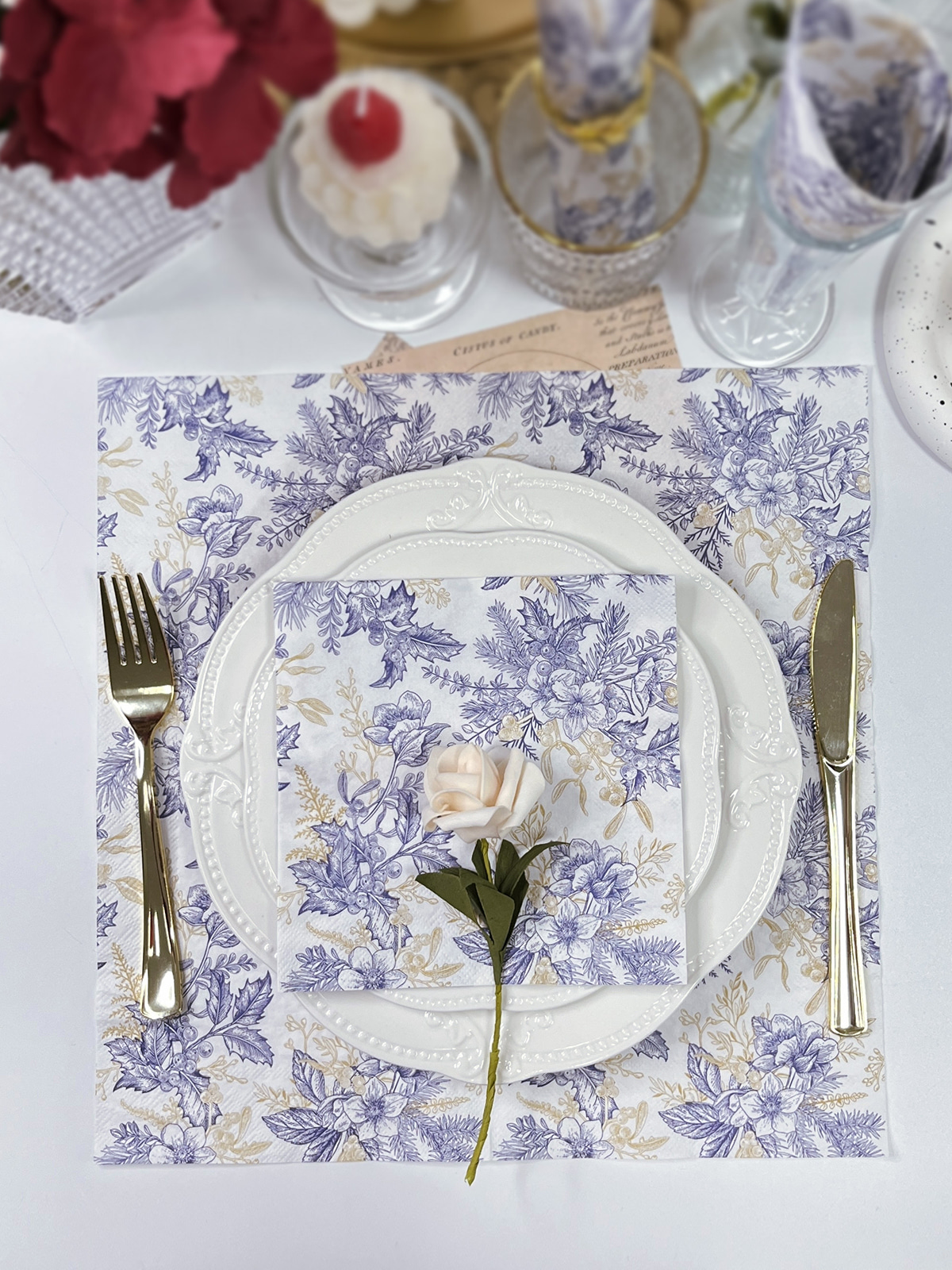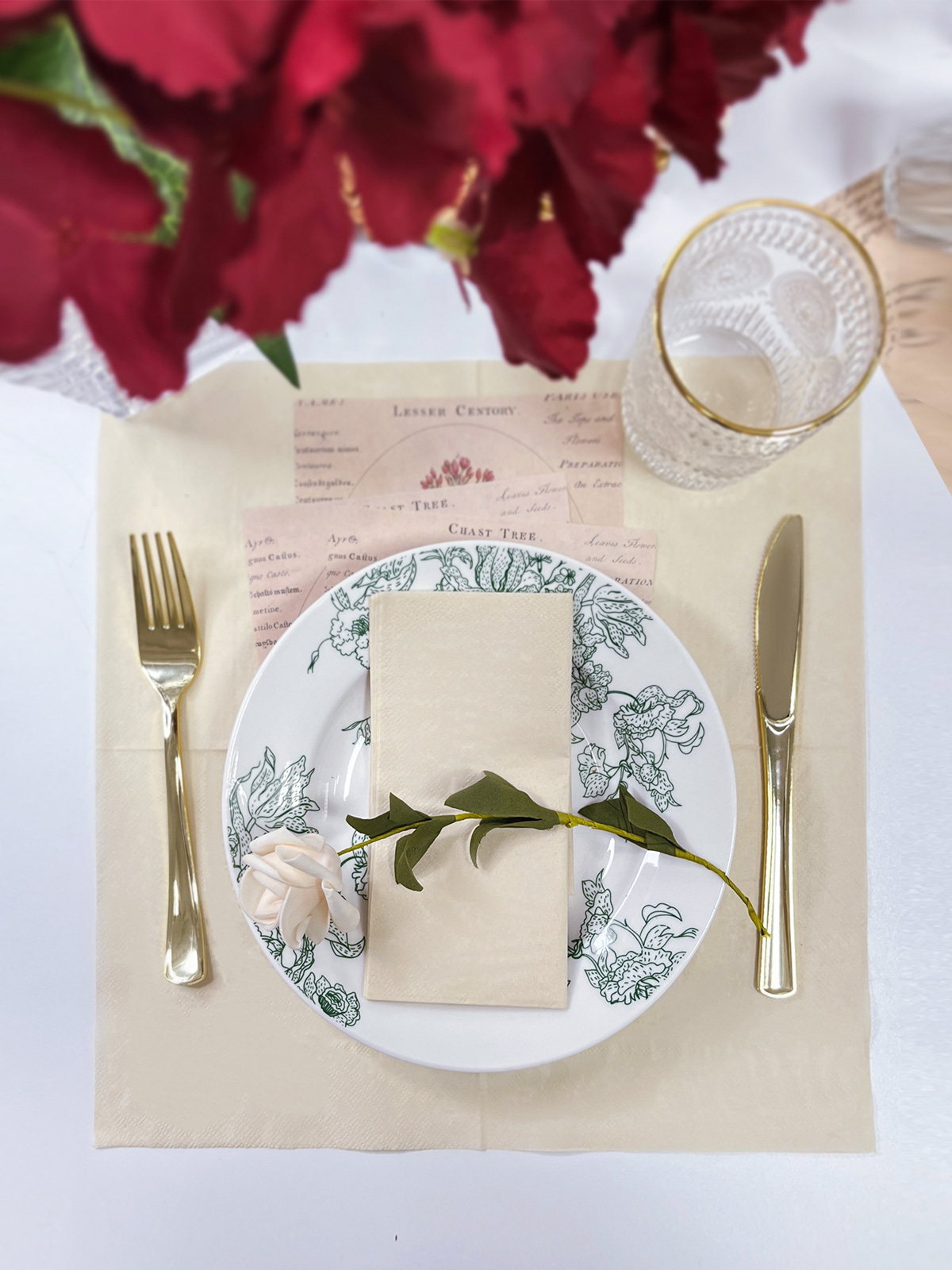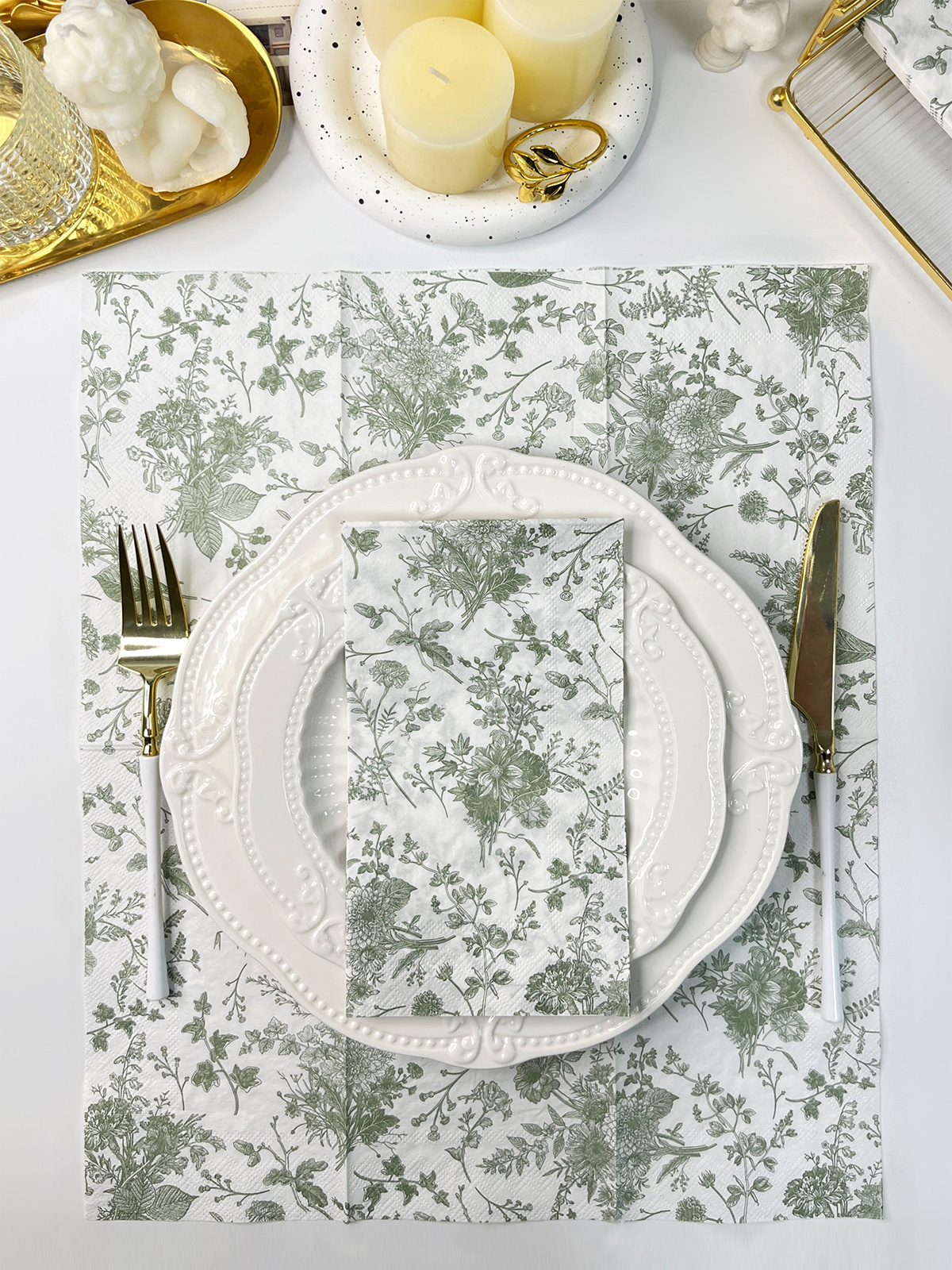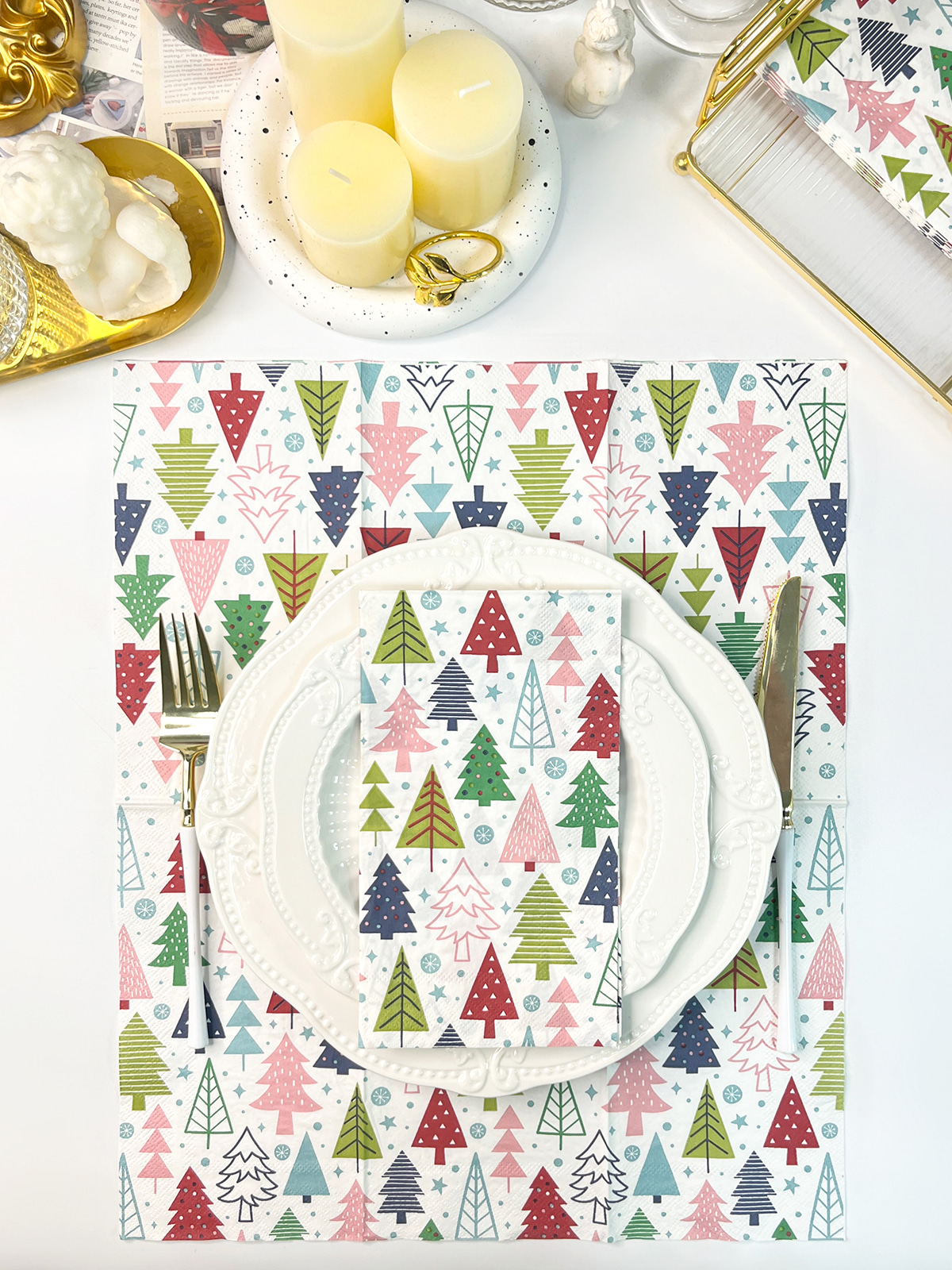
 English
 中文简体
中文简体
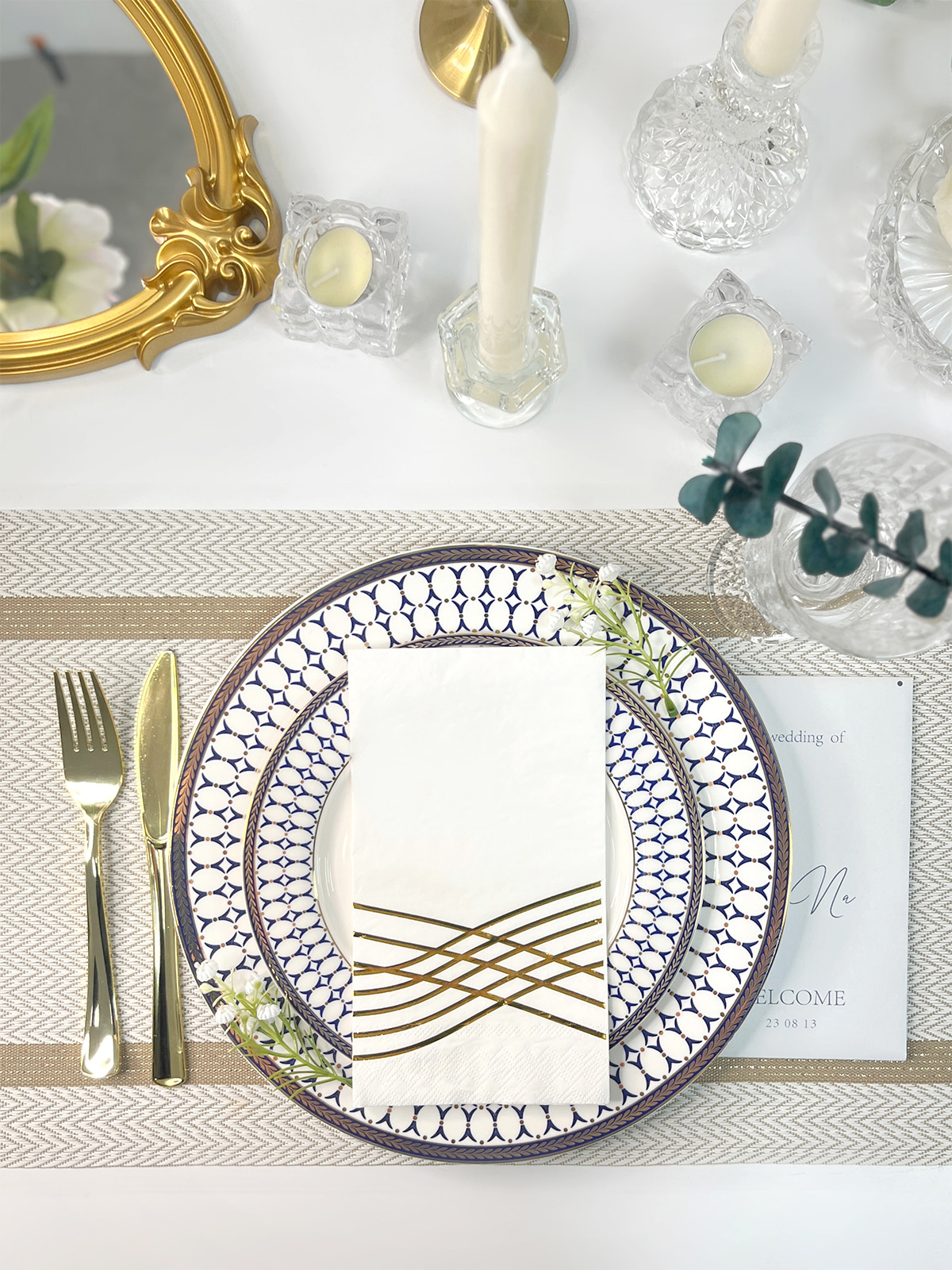
Printed Table Napkins are made from more than a sheet of paper with a pattern placed on the surface. Their feel, absorbency, folding behavior, and printed appearance are closely connected to the materials selected during production. A soft sheet may feel comfortable on a dining table, while a slightly firmer structure may hold its shape more easily during folding and handling.
Paper remains the main material in this product category, although paper itself can have different fiber sources and surface characteristics. Printing materials also need to work with the paper rather than being considered separately. The relationship between the sheet and the printed design can affect how a napkin looks, feels, and behaves during normal use.
For that reason, material selection is closely tied to the intended function. A napkin designed for everyday dining may place greater attention on softness and liquid absorption, while a decorative design may require a surface that can carry lines, text, or colored areas without changing the natural feel of the sheet.
Content
- 1 What Paper Materials Are Used for Printed Table Napkins?
- 2 What Materials Are Used for Printing on Table Napkins?
- 3 How Are Creative Paper Napkins Made Suitable for Different Designs?
- 4 Why Does Absorbency Matter in Printed Table Napkins?
- 5 How Do Folding and Handling Affect Material Selection?
- 6 How Should Materials Be Considered During Storage and Production?
- 7 What Should Be Considered When Choosing Materials for Printed Table Napkins?
What Paper Materials Are Used for Printed Table Napkins?
Paper fibers create the framework of the sheet, and the way those fibers are processed can influence softness, strength, absorbency, and surface appearance.
Fiber sources can generally be divided into paper made from newly processed fibers and paper containing recovered fibers. Each option can produce a different combination of physical characteristics. Newly processed fibers can provide a relatively consistent structure, while recovered fibers may have a different texture depending on their previous use and processing.
The choice is not simply about whether one type of fiber is suitable and another is not. Production requirements, desired feel, intended use, and surface appearance all have a role.
For a table napkin, excessive firmness can make the sheet feel less comfortable when handled. A very loose structure, on the other hand, may make folding and movement more difficult. Manufacturers therefore need to consider how the paper will behave from the forming stage through printing and final use.
Several paper characteristics are particularly relevant:
- Fiber structure affects the basic strength and flexibility of the sheet.
- Softness influences how the napkin feels when picked up or folded.
- Absorbency determines how readily the sheet takes in moisture.
- Surface condition affects how printed elements appear.
- Sheet formation influences how consistently the paper behaves during processing.
These properties are connected rather than independent. Changing the fiber composition or processing approach can alter more than one characteristic at the same time.
What Materials Are Used for Printing on Table Napkins?
The printed layer usually relies on ink formulated to work with paper products. For napkins used around food and dining environments, material suitability deserves careful attention because the printed surface may come close to hands, food, plates, and other tableware.
Water-based printing inks are commonly considered for paper applications because their composition and drying behavior can suit absorbent paper surfaces. Once applied, the liquid portion of the ink interacts with the sheet while the remaining color-forming material stays within or near the paper surface.
Ink selection affects more than color. It can influence drying, surface feel, print definition, and how the design responds to folding or handling.
A suitable printing material should therefore be considered together with the paper rather than chosen independently. A highly absorbent sheet may interact with ink differently from a denser sheet. Similarly, a textured surface can produce a different visual result from a smoother one.
Material compatibility can be considered through several practical questions:
- Does the ink spread too far into the paper fibers?
- Does the printed area dry properly before folding?
- Does the surface remain flexible after printing?
- Does the design retain acceptable clarity after handling?
- Is the selected printing material appropriate for its intended use?
Such questions become part of production planning rather than simply quality inspection at the end.
Printed Table Napkins also need to maintain a natural paper feel. Excessive material on the surface may change how the sheet bends or folds. For a product that is handled directly, the printed area should remain consistent with the overall character of the paper.
As a result, paper selection and ink selection are closely linked. A change in one material can create a need to adjust the other, particularly when a design contains detailed graphics or large printed areas.
How Are Creative Paper Napkins Made Suitable for Different Designs?
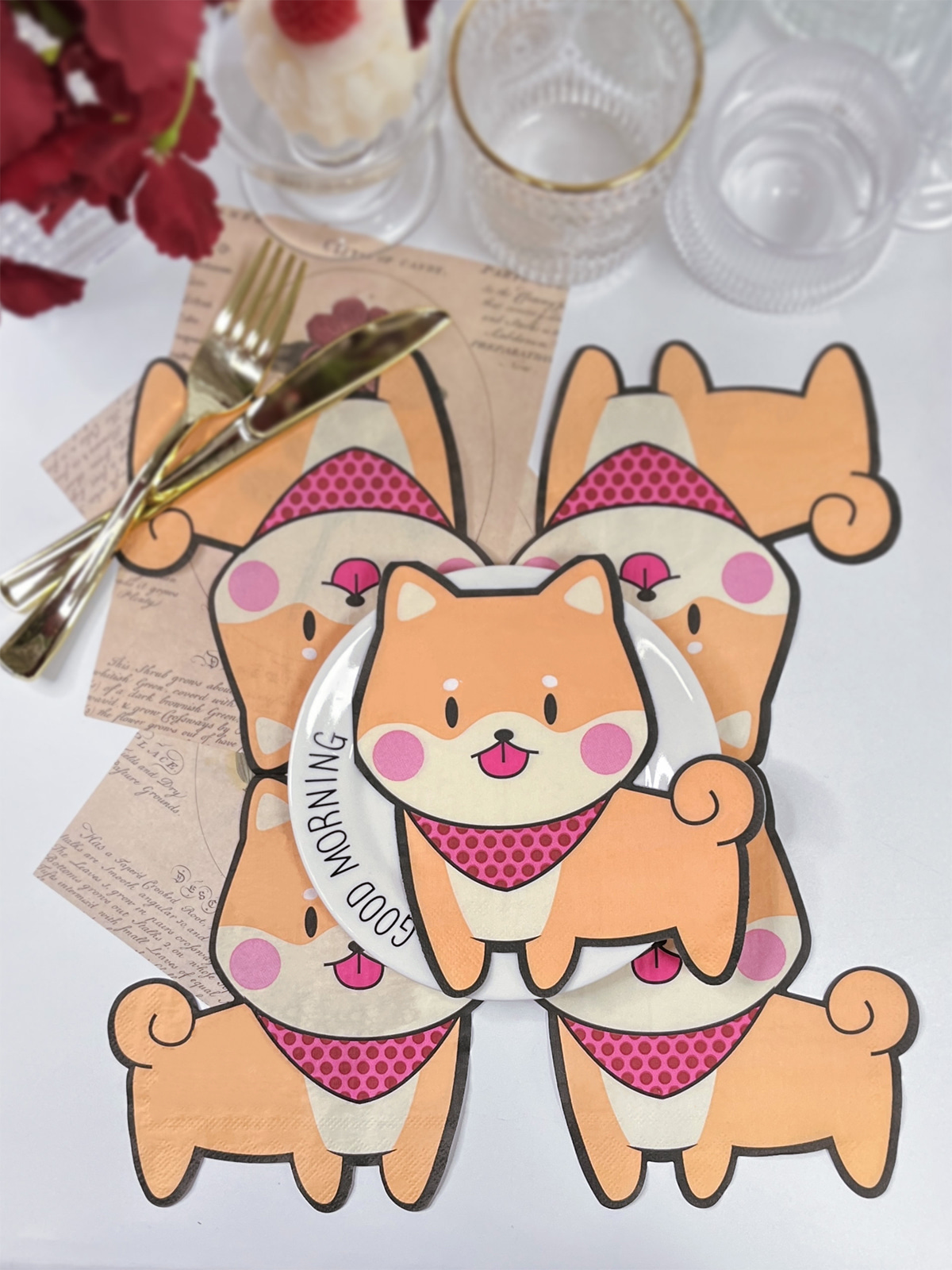
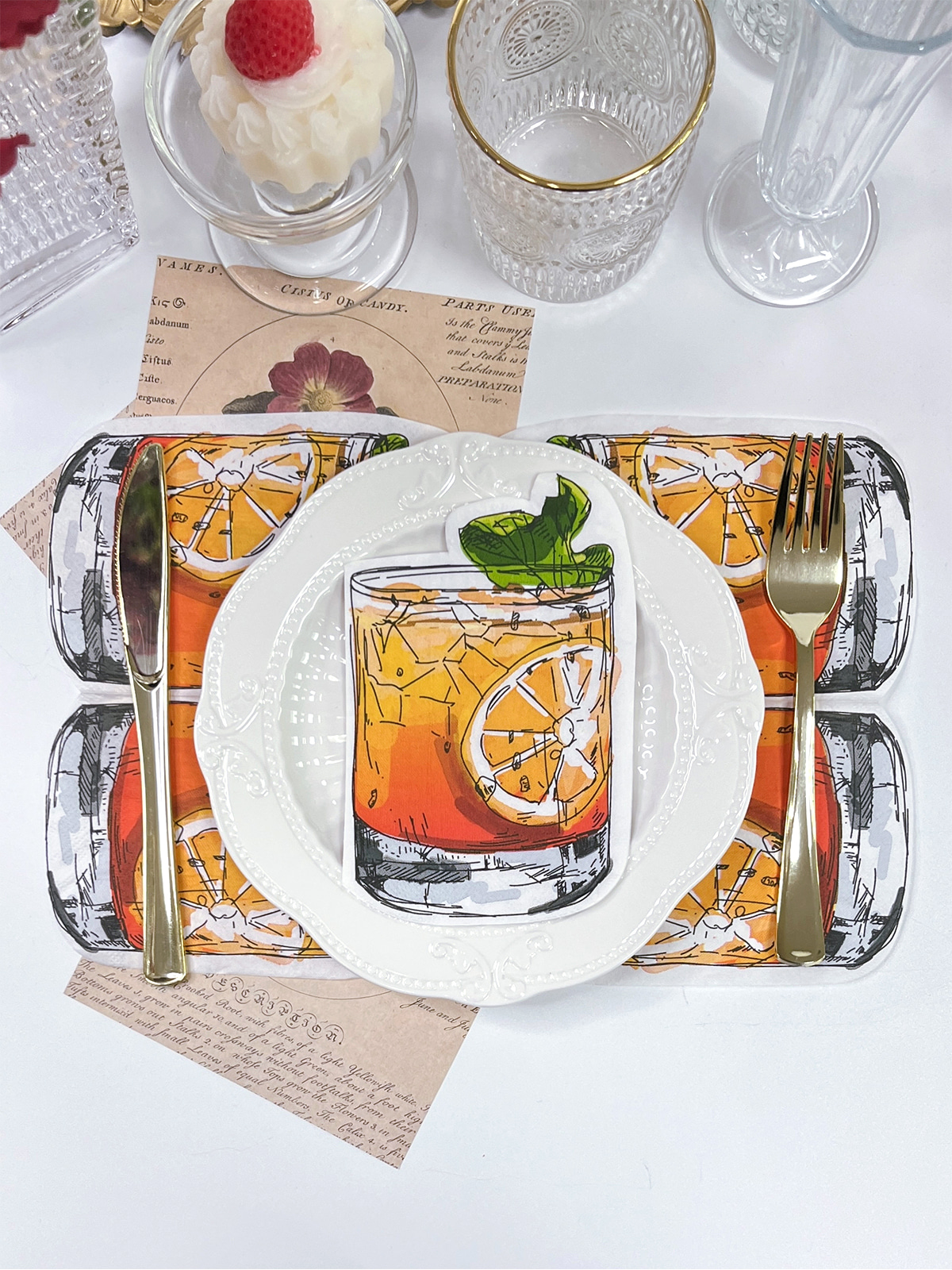
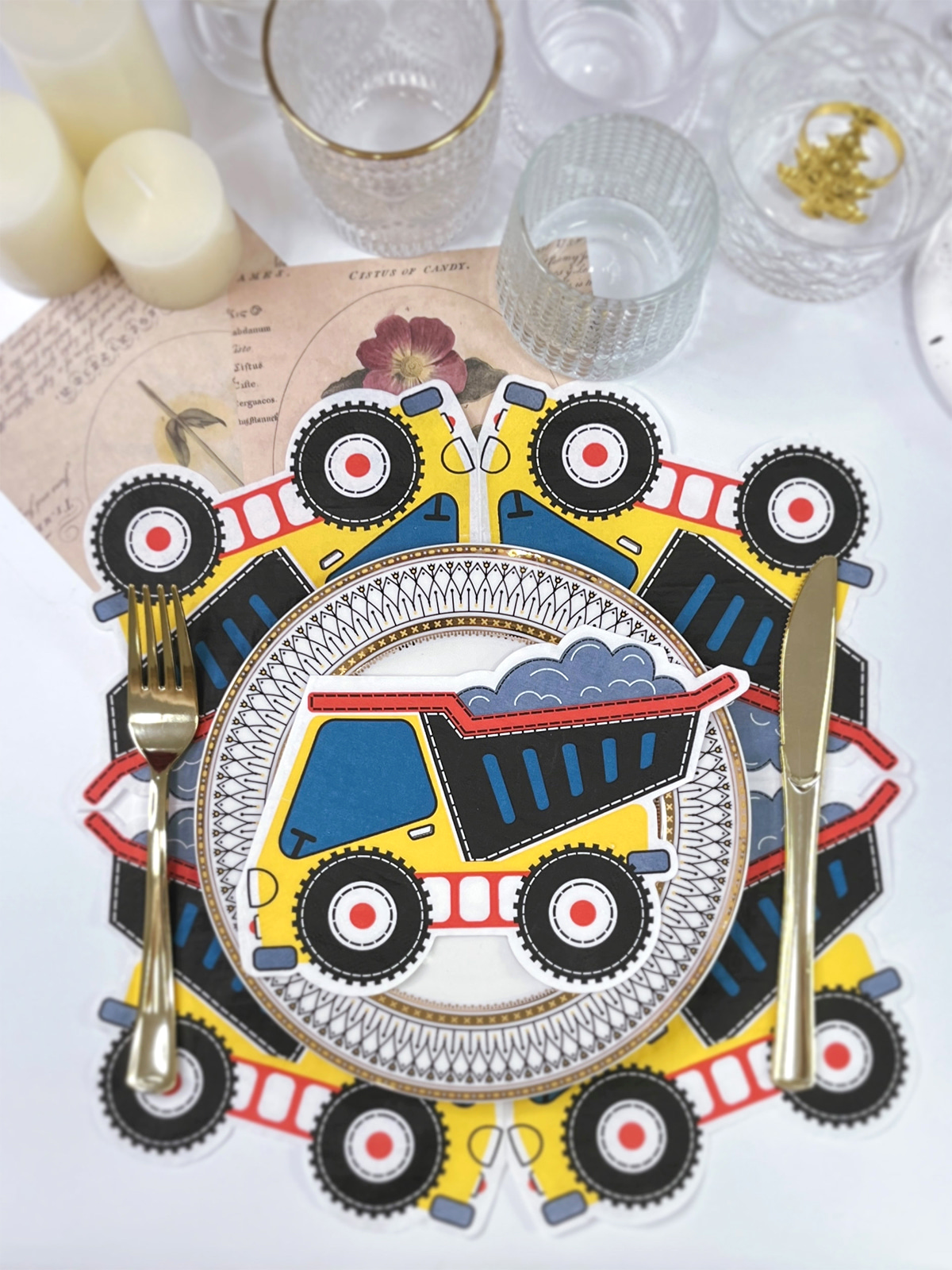
Creative Paper Napkins bring design considerations into a product that still needs to function as a paper napkin. The visual element may attract attention on a dining table, yet the underlying material still needs to fold, absorb moisture, and remain comfortable to handle.
Design complexity can influence material selection. Simple graphics generally place different demands on paper than small text, narrow lines, or detailed illustrations. Large color areas may also interact with the surface differently from isolated decorative marks.
The relationship can be viewed through the following comparison:
| Design or Use Characteristic | Material Consideration | Possible Production Concern |
|---|---|---|
| Simple decorative pattern | Even and flexible paper surface | Maintaining clear shapes after folding |
| Fine text or narrow lines | Consistent surface formation | Preserving readability |
| Large printed areas | Appropriate ink absorption | Avoiding an overly noticeable change in surface feel |
| Frequent folding | Flexible layered structure | Reducing unwanted creasing effects |
| Moisture-related use | Suitable absorbent paper | Keeping the sheet practical during handling |
A design also needs to fit the folding format. When a napkin is folded, some parts of the printed image may become hidden while others appear on the outside. The position of the design therefore interacts with both the paper structure and the final folding method.
For Creative Paper Napkins, material choice is consequently part of the design process. The visual concept may begin with a pattern or illustration, yet the final appearance depends on how that concept behaves on the selected paper.
A paper surface that absorbs ink quickly may produce a softer-looking graphic, while a more controlled surface may retain clearer edges. The desired result needs to be considered alongside the functional requirements of the napkin rather than treated as a separate stage.
Why Does Absorbency Matter in Printed Table Napkins?
Absorbency is closely connected with the basic purpose of a table napkin. Paper needs to take in moisture while remaining easy to handle, so the internal fiber structure has a direct influence on everyday performance.
When liquid reaches the sheet, it moves through the spaces between paper fibers. A more open structure can allow moisture to enter the sheet relatively quickly, while a denser structure may slow the movement. The balance affects how the napkin feels during use.
Printing introduces another layer of consideration. Ink occupies part of the paper surface and may alter the way moisture interacts with a printed area. Large printed sections can therefore behave somewhat differently from areas without ink.
For Printed Table Napkins, the goal is not simply to create a visually clear pattern. The paper still needs to retain its absorbent character after printing. Excessive ink application can change the feel of the surface, especially when a large section is covered by a design.
Paper selection and printing conditions consequently need to be considered together. A highly absorbent sheet may require careful control of ink application, while a paper with a tighter surface may respond differently during printing.
Absorbency can also affect the choice of design. A pattern with small separated elements leaves more of the paper surface available for normal contact with moisture. A heavily covered surface creates a different material balance.
Several factors can influence this interaction:
- Fiber arrangement affects the movement of moisture through the sheet.
- Paper softness changes how the napkin responds during wiping.
- Ink coverage can alter the surface feel in printed areas.
- Layer structure influences how moisture moves between sheets.
- Folding can create different contact surfaces during use.
None of these characteristics exists on its own. A change in paper structure can influence softness and absorbency at the same time, while printing can introduce another variable into the finished product.
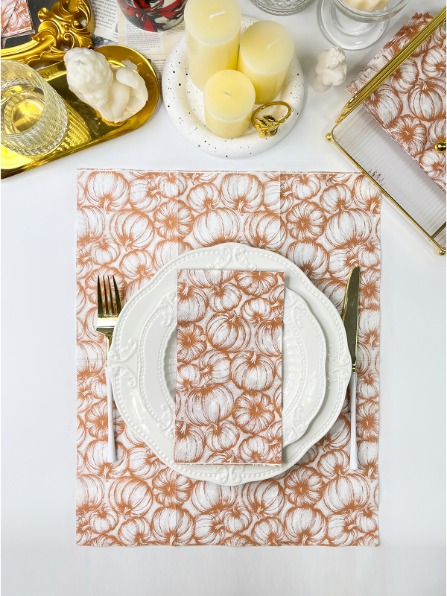
How Do Folding and Handling Affect Material Selection?
A table napkin rarely remains flat from production to use. Sheets are folded, stacked, packed, transported, opened, and handled around a dining table. Each movement places some pressure on the paper structure.
Flexibility is therefore an important material consideration. Paper that bends easily can follow a folding pattern without feeling excessively stiff. A suitable layered structure can also help the folded shape remain intact during handling.
Folding creates lines where the paper fibers receive repeated pressure. The effect can become more noticeable when a printed design crosses the fold. A graphic may appear visually interrupted, especially when the fold is sharp or the paper surface has a noticeable texture.
For that reason, the placement of printed elements can be considered alongside the material itself. Fine lines positioned across a fold may behave differently from broad shapes placed within a flat section.
The issue becomes relevant for Creative Paper Napkins because decorative designs often rely on visual balance. A pattern intended to appear continuous may need to account for the final folded arrangement. Material flexibility, fold depth, and print placement can all influence the finished appearance.
Layered paper also affects handling. Different layers can move slightly against one another during folding and opening. Proper bonding between layers helps the sheet behave as a unified material while retaining enough flexibility for normal use.
A practical production process therefore considers several stages together:
- Paper is selected according to the intended folding structure.
- The surface is prepared for the planned printing process.
- Ink is applied in a way that remains compatible with the sheet.
- Printed material is allowed to reach a suitable handling condition.
- Folding is carried out according to the required format.
- Finished napkins are handled and packed without unnecessary pressure.
The sequence matters because a change made at one stage can influence a later operation. For example, a paper surface that performs well during printing may respond differently when folded under pressure.
How Should Materials Be Considered During Storage and Production?
Paper is sensitive to its surrounding conditions. Moisture in the air can influence flexibility, while a dry environment can make some paper structures feel less pliable. Storage conditions therefore have a practical relationship with both printing and folding.
During production, paper needs to move through different stages without losing its intended characteristics. A sheet that absorbs moisture unevenly can behave differently across its surface, which may affect printing or folding.
Ink also requires suitable handling after application. Before the printed sheets move into later processing, the ink needs enough time to settle into an appropriate state. Folding too soon can create unwanted transfer or changes in surface appearance.
Storage after production deserves similar attention. Printed Table Napkins can be affected by prolonged exposure to moisture, heat, pressure, or unsuitable packing conditions. The paper may become softer, harder, or less stable depending on the surrounding environment.
Packaging serves a practical role here. It helps reduce unnecessary contact with external conditions while keeping folded sheets in an orderly form. Excessive compression, however, can influence the shape of the finished napkins.
Material consistency is also relevant during production. Paper from different batches can have small variations in texture, flexibility, or absorbency. Such differences may become visible during printing or folding even when the basic paper type remains unchanged.
A production team therefore needs to observe the material throughout the process rather than treating paper as a fixed input. Changes in surface condition, moisture balance, folding response, or ink behavior can provide useful signals about whether the selected materials are working together as intended.
What Should Be Considered When Choosing Materials for Printed Table Napkins?
Material selection for Printed Table Napkins starts with the intended use rather than the printed pattern alone. Dining environments, decorative table settings, hospitality applications, and event-related uses can place different demands on the paper.
A product intended for regular wiping needs an appropriate combination of softness and absorbency. A decorative napkin may place greater attention on surface appearance and folding structure while still requiring practical handling characteristics.
Creative Paper Napkins add another consideration because the design itself becomes part of the material decision. A detailed graphic may need a relatively consistent paper surface, while a simple pattern can work with a wider range of textures.
The selection process can be viewed through several connected questions:
- What kind of handling is expected? Frequent opening and folding call for a flexible sheet structure.
- How important is moisture absorption? Dining applications generally require paper that can respond to spills and damp surfaces.
- What type of design will be printed? Fine text, narrow lines, broad shapes, and open patterns can interact with paper surfaces in different ways.
- How will the napkin be folded? A complex fold may place greater demands on flexibility and layer stability.
- How much of the surface will be printed? Larger printed areas may have a greater influence on surface feel and moisture interaction.
- What storage conditions are expected? Paper characteristics can change when exposed to unsuitable moisture, heat, or pressure.
A useful material choice comes from looking at these factors as a connected system. Paper softness cannot be separated entirely from fiber structure, while absorbency cannot be considered without looking at sheet formation. Printing behavior also depends on the relationship between ink and paper surface.
The same principle applies to design. A printed pattern may appear different after folding from how it looks on a flat sheet. The final visual result depends partly on the material beneath the ink.
Creative Paper Napkins show the connection particularly clearly. Decorative value comes from the printed design, while practical use still depends on the paper structure underneath. Material selection therefore needs to accommodate both sides of the product without allowing one characteristic to undermine another.
Careful consideration of paper and printing materials can also make production more predictable. When the paper surface, ink behavior, folding method, and storage conditions are considered together, fewer adjustments are needed later in the process. The result is a more consistent relationship between appearance, handling, and everyday use.